Youth Are Awesome, commonly referred to as YAA, is a blog written by youth for youth.
YAA provides the youth of Calgary a place to amplify their voices and perspectives on what is happening around them.
Youth Are Awesome is a program of Youth Central.
Any views or opinions expressed on this blog belong solely to the author and do not represent those of people or organizations that the blog may be associated with, unless explicitly stated. All content is for informational purposes only.
As the school year is back into full swing, life may sometimes feel overwhelming. Physical activity regardless of what type can be a great way to help you refocus and revitalize your day. Here are some tips on how to have a healthier year!
Set goals
Sometimes the hardest part of getting some physical activity is actually starting! Try setting a “move goal” for each day or each week, that way you have something which you can work towards when you get home from a busy day of work or school. For example, try aiming for 30 minutes of activity per day; this could range from anything like a walk around your neighborhood, playing some soccer in your backyard, or going to the park.
2.) Enjoy what you are doing!
It is important to do activities which you will enjoy doing! Playing games or doing activities which you enjoy will increase motivation and commitment to the activity which you are doing. Doing activities which you enjoy turns “staying fit and healthy” into loads of fun rather than a chore. Moreover, playing games or sports with friends and family can be a great way to bond and have a great time!
3.) Try something new!
The best part of getting physical activity is that you can discover a new sport or game. Make it a goal to try a new activity once a month, this can range from a new sport, a new game, or even a new workout. By trying something new, you are bound to have fun, all while discovering new activities that you may have never otherwise tried!
Staying organized in school is crucial for your academic success. By being organized, you can balance sports, school, and free time. Also, you will probably do better in exams and you won’t get as stressed. Here are some tips to help you stay organized:
Tip #1: Have a planner to write down when tests are, what homework you have, or when sports tryouts are. You can have a separate planner for your extracurriculars (ex. Application due on Friday, volleyball practice on Wednesday), or you can simply have everything in one big planner.
Tip #2: Study for tests and do all your homework as early as possible. If you are a student, you probably hear this a lot. However, it will make your life a lot easier if you don’t cram the day before the test. If you have a big project due in two weeks, the earlier you do it, the better. Also, a lot of teachers say, “Whatever you don’t finish in class, finish for homework.” In that case, just finish it in class, then you don’t have to worry about it!
Tip #3: Develop a binder system that works for you. In junior high, one of the easiest methods is to just have one big binder for all subjects. Every time you start a new chapter in any subject, you empty the old material into a file box. You will have one file for each subject. For midterms or finals, just look back into the file of that subject. With this system, you’ll never say, “Oh no, I forgot my math binder at school.” In senior high, you might want to switch to one binder per subject, because you have so many more papers. Use whichever system suits you best.
Tip #4: Organize your workspace. Work somewhere quiet and distraction-free so that you can focus. Put your phone downstairs while working. This may be shocking, but you can survive an hour without checking your phone! If there are no distractions, you will get work done faster.
Tip #5: Have an idea on when to study for each subject during finals. You will have multiple tests, and you should know on which day and at what time you’re studying for each subject. You may need more time to study for a particular subject, so you should account for that. This will ensure you don’t forget to study for a subject. Also, remember to take breaks after working for more than an hour. Get up for fifteen minutes, stretch, do some jumping jacks, and get some water. This is scientifically proven to improve concentration.
Bonus tip: If you need to memorize some things quickly, one of my favourite methods is to use flashcards. Firstly, write your flashcards by hand. By writing the word and its definition, you have already subconsciously started memorizing the word! Secondly, read through all the flashcards and divide them into three piles. One pile is “I have no idea,” another is “I kind of think it’s this,” and another is “I know that one.” After you have divided your flashcards into piles, Put a red paperclip on the “I have no idea” pile, put a yellow on the “I kind of think it’s this” pile, and finally put a green one on the “I know that one” pile. Now, review the red pile first, then the yellow pile, then you’re done! Of course, you can change the colours to whatever you want.
If you follow at least some of these tips, I’m certain you will have a very successful year!
Over 400,000 Canadians deliberately hurt themselves every year. And only about 50% of all Canadians enduring mental illness actually admit that they suffer. In all likeliness, you are surrounded by people suffering from mental illness in your everyday lives, at home, at school, at work, and you probably don’t even know it.
This Sunday, September 30th – October 6th, is Mental Health Awareness week in Canada. This week’s aim is to open the eyes of Canadians to the reality of mental illness. But as stated by the Canadian Mental Health Association, “It’s more than being happy all the time. It’s about feeling good about who you are, having balance in your life, and managing life’s highs and lows. Everyone deserves to feel well, whatever their mental health experience. And we all need a support system to lean on.”
In honour of all the Canadian youth and adults who suffer silently, sometimes heroically, but often with the hard crushing stigma and shame of mental illness in our society, I have compiled a list of some of the greatest works I have come across that bring light to this important issue.
Slam Poem: I Will Not Write Your Obituary by Nora Cooper- written and presented at the College Unions Poetry Slam Invitational in 2015
It reflects the struggles of people who experience this illness every day as well as the struggles of their loved ones, who suffer along with them, although in different ways.
2. Facebook Post: Re: The Death of Kate Spade by Claudia Herera
After the tragic news, that 55-year-old designer, Kate Spade was found dead after reported suicide last June, the Internet and social media broke out with people offering their mourning. One of these messages was a Facebook post that went viral written by Claudia Herrera who posted a photo of her Kate Spade bag along with a profound message about mental health. Click here to see what she wrote.
3. This Video created by Newfoundland and Labrador Musician, Amelia Curran along with filmmaker Roger Maunder and recording engineer Don Ellis
In this video, Curran asks a very crucial question – in a time when mental health is one of the biggest challenges facing our society, why aren’t we doing more about it? Starring many celebrities, Curran says when she first started, this video was meant to tell her own story, but that things just kept getting bigger.
4. The Huffington Post: Why We Don’t Have Walk-in Clinics for People with Mental Illness by Arthur Gallant
This thought-provoking article addresses the topic of how essential it is to have immediate free access to psychiatric care. As Gallant puts it, “The health care system keeps telling us to keep our physical health in check… Isn’t it about time, we do the same for mental health?” Click here to read the full article.
5. Youth Central: Speak Your Mind Project
Finally, take a few moments to check our Youth Central’s Speak Your Mind Photography Project with young volunteers in your community trying to normalize and get the conversation around mental health started.
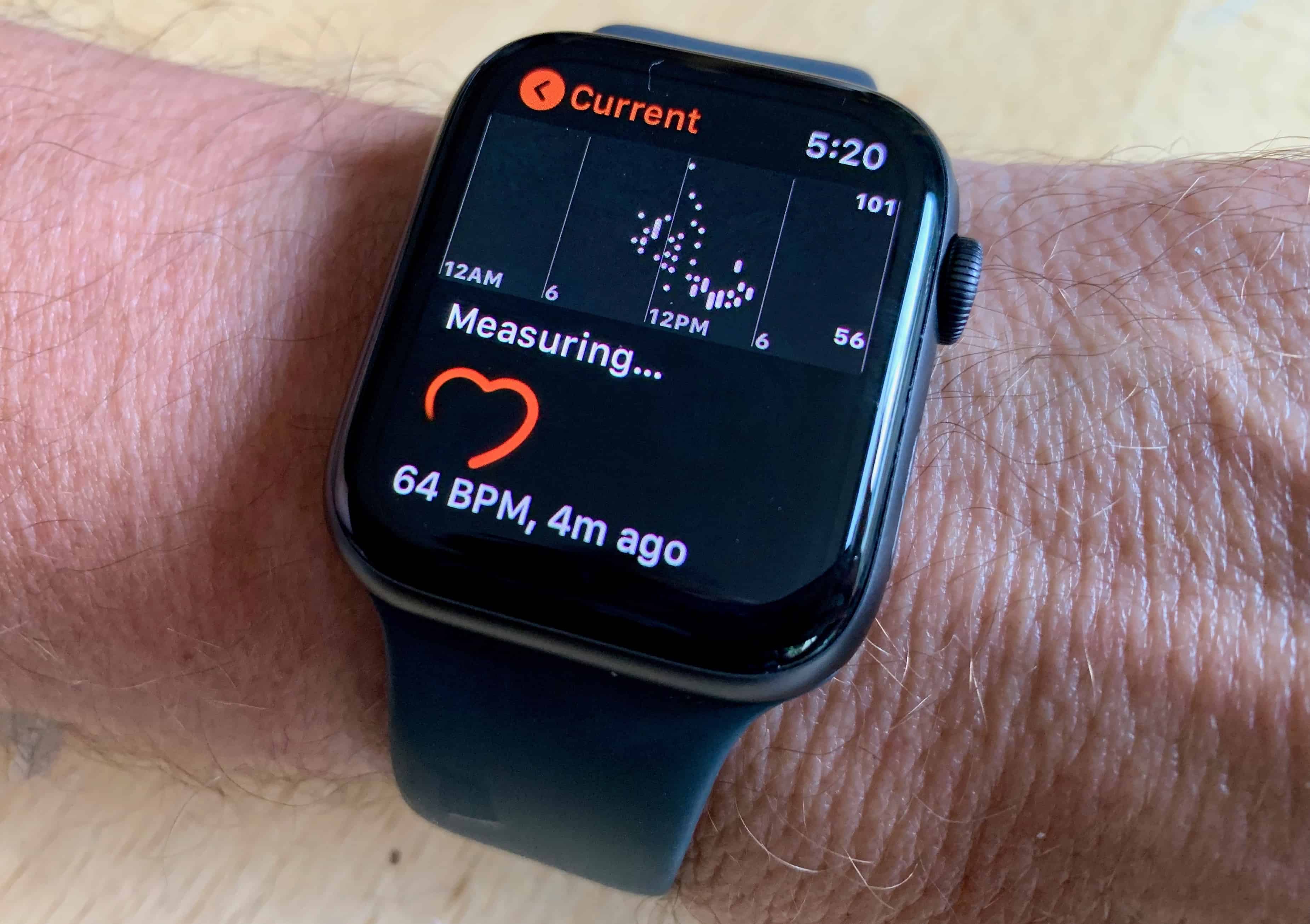
It’s that time of year again! As the temperature begins to drop, and the leaves adopt a yellowish hue, that can only mean one thing- Apple Keynote time! This year Apple announced some new and exciting products, however, none stood out as much as the newly updated Apple watch Series 4. This year’s Apple Watch brings in some distinct and positive changes to the fifth version of Apple’s watch.
Probably the most visible and notable upgrade on the new Apple watch is its display. The newest Apple watch screen has been updated to stretch from one end of the watch to the other, thus keeping bezels extremely small and allowing the watch to display more information with more detail. As a result of this, applications look more expansive and understandable and what you can view on the Watch is significantly more informative, as a result of the added screen real estate. Because of this added screen space, Apple has added two new watch faces which are exclusive to the Apple watch series 4, those being the Infograph and Infograph modular, these are both watch faces which allow a large array of complications on the screen, with the Infograph watch face allowing for up to 8 complications.
Aside from the beautiful new screen, the new Apple watch has also improved in speed. Its new processor allows for the smooth opening of applications and the seamless transitions between tasks. Improvements to the hardware also allow the Apple watch to have excellent battery life giving users enough power to easily get through the day.
The final notable feature which was announced on the new Apple watch was a redesigned heart sensor. The new sensor now allows for a more accurate and thorough heart rate reading with the future ability to give ECG’s in the next Watch OS update in the United States.
Overall the Apple watch is a product which is currently living up to its expectations. It’s newly redesigned screen and a plethora of hardware updates makes it a solid option in the smartwatch market amongst its other competitors.
Preface: This is a funny, fictional script for a radio advertisement. Try reading it aloud in a funny voice, and have fun with my satirical “advertisement”! ** Note: The product “RDTBBPBACI” does not exist in real life.
“…Have you ever had bad breath? If not, you’re not human, go fly back to Mars. If yes, you’re in luck!
Introducinggggg the Rad Death to Bad Breath Pills by Alex Companies Incorporated, also known as the RDTBBPBACI for short!
Rad Death to Bad Breath is an innovative approach to a problem that has affected humankind for thousands of years. Well, not just us.
When dinosaurs were alive, their number one priority was not food, water, or shelter as you may have guessed. No, in fact, it was the presence of bad breath that haunted them… so much so that they went extinct!
We don’t want this to happen to humans, do we? I guess Rad Death to Bad Breath just saved your life. Buy Rad Death to Bad Breath! It even rhymes, which is the sign of a creative, established product destined to save the world!
There is, however, one small side effect, a side effect so small you probably won’t care, but since we are such a great company, we have decided that you deserve to know.
Exactly 2 months, 6 days, 22 hours, 17 minutes, 26 seconds, and 384 milliseconds after you have ingested the pill, you may or may not grow a third arm from your left shin. Don’t worry it’s not a big deal. But you should proceed to cut it off right away, which shouldn’t hurt too much. If you don’t, other small, insignificant (fatal) side effects may or may not occur.
Other than that, Rad Death to Bad Breath is the solution to save our society from the detrimental and diseased clutches of the devil that is bad breath.
Buy one pill for only ONE (hundred thousand) dollars! But if you want a huge discount, buy 3 pills for just two hundred ninety-nine thousand nine hundred ninety-nine dollars and ninety-nine cents!!! Yes, that’s right folks, get your three pills for a limited discounted price now…”
How fast is technology really advancing? The answer is: Fast enough that there is a new stylish Nokia, something that doesn’t break AND is aesthetically pleasing. Now, we’ve all seen androids filling this description for the past couple of years, but now it’s time for Apple to join the race. How durable is the iPhone XS? On September 12, the new iPhone XS, XS Max, and XR were announced by Apple, each phone pricier than the last, without the headphones included. Twelve days later, CNET reporter Vanessa Hand Orellana published an article, where she describes the effect of dropping the iPhone XS from various heights on its screen.
Durable glass isn’t the only improvement in tech. Another breakthrough is the increasing popularity of 3-D metal printing. In the near future, mechanics will be able to 3-D print old or aging car parts, meaning inventories containing parts will no longer be needed, just a machine. An article by the MIT Technology Review says, “The technology can create lighter, stronger parts, and complex shapes that aren’t possible with conventional metal fabrication methods. It can also provide more precise control of the microstructure of metals. In 2017, researchers from the Lawrence Livermore National Laboratory announced they had developed a 3-D-printing method for creating stainless-steel parts twice as strong as traditionally made ones”. The original use of machines was to make human life simpler, and it seems as if the line to which machines are able to do that is receding towards the maximum. The spread of 3-D printing is a prime example of that.
How fast can life be created? If we look at the 21st century, the sudden increase of population due industrialization is decreasing. New methods of birth control are being tested. There are solutions for people who are infertile. If we consider the question, the answer would have been based on the rate at which humans can reproduce; however, now we will have to consider artificial embryos. Magdelena Zernicka-Goetz, who headed the team that placed mouse cells in a three-dimensional scaffold watching how they communicated and formed an embryo, said in an interview, “We know that stem cells are magical in their powerful potential of what they can do. We did not realize they could self-organize so beautifully or perfectly.” The next step here is to take human stem cells and watch the result of the experiment.
Toronto Sensing City
When I read about breakthroughs in technology, I always wonder where in the world I could find such things. This is why I got pretty excited when I read something that hit close to home. Toronto is making a bold plan of changing an urban neighbourhood where the vehicles will be autonomous and robots roaming underground doing small errands such as delivering mail. This brings the discussion of artificial intelligence. So far, AI has mainly just been a plaything for big tech companies, as it is difficult and expensive to build AI systems. Google, Microsoft, and Amazon have been challenging each other in becoming the leader in offering AI services. Most companies do not have enough people who know how to use AI or program their systems. However, Amazon, Google, and Microsoft are setting up consultancy services. Once this comes in the reach of the public, “the real AI revolution can begin.“
Another breakthrough in technology is earbuds that produce a real-time translation. “One person wears the earbuds, while the other holds a phone. The earbud wearer speaks in his or her language—English is the default—and the app translates the talking and plays it aloud on the phone. The person holding the phone responds; this response is translated and played through the earbuds.“
So is phone durability really what’s new in tech? Are machinery and artificial intelligence the future of our world? These are certainly advancements with new ideas and concepts. They also raise the questions: Is there really anything new in technology? Or is it all advancements? The best answer to those questions is that technology is improving by combining concepts in a different way, which results in a new product. This is the advancement we see when we talk about the new things in tech. Artificial intelligence, self-driving cars, drones, these are all combinations of different fields. They are also what makes 21st-century technology so vastly different from the 20th century; we have invented things based on the premises of other things. With the ever-growing development of the STEM fields, the question: ‘what’s new in tech’ will have some trouble giving answers as fast as they are coming.
It’s fall. The weather is colder, the days shorter. The green of the leaves pulls back to reveal the hidden gold in preparation for the surrender to the winter ahead. This display is well-known and romanticized. The withered foliage murmurs softly in reply to the whispers of the breeze and the shuffling of boots. But have you noticed how the sunsets are also more vivid in the fall?
A herd of lambs dots the sky as they begin their pursuit of lulling the world to sleep, and the horizon is covered with layers upon layers of blanket-like clouds. The sun begins its descent and envelops the earth in its amber glow. The sky morphs from blue to yellow as the final rays of daylight extend to the ground. But the sun refuses to leave without a display of brilliance.
Each drop of yellow becomes a splash of gold. The clouds are canvases upon which nature, the greatest artist, paints its ephemeral masterpiece. Ambers, oranges, and crimsons flow from the paintbrush. The sky blushes at this fanfare. This is no simple lullaby. This is a symphony. The final prodigious chords ring out as the sun exclaims its farewell. Although everything is going into hibernation, the sun refuses to become complacent and meek. As the trail of scarlet disappears, the indigo of above settles to tuck in the covers, leaving behind only wisps of rose.
Procrastination leads to an unproductive lifestyle that builds bad habits. It is bane for being efficient and growing. It holds us back from achieving our goals and propelling forward. Here are some tips to fight procrastination and unproductivity.
Acknowledge what it is that is preventing you from being productive and be specific. Being particular will provide you with a more clear path to fighting torpor. Without knowing this, you’ll won’t be able to stop the negative behavioural patterns. These bad habits will turn into a daily routine that lead you to squander additional time. When issues like these are addressed, it is easier to stop them from reoccurring.
If you have a schedule or a planner of some sort, it will help you to keep track of things you need to get done. This may be difficult to get into especially if you get easily distracted. The key is to start small. If you usually start studying at 9:00 P.M at night, the next time you could start studying would be at 8:50 P.M. This a gradual and slow process that will lead you to your end objective. If you endeavour to achieve everything at once, you’ll get discouraged.
There are lots of different things that could potentially help you remember what you should be doing and staying on track, so get creative. If you need to study, put your textbook by your laptop or in plain sight so it reminds you to study. Set alarms on your phone or reminders to help trigger you to start being productive. Get rid of junk foods in your house if you want to start eating healthier. These are a couple of examples that might work for some of you, but try different things and see what works best.
Be proud of what you have achieved. Over time, you’ll be able to see what progress you’ve gone through and your growth. The bad habits that you once were doing turned into positive ones. Seeing the change you’ve gone through can become an incentive for achieving more great things.
Rewards are beneficial because it encourages you to remain motivated and work harder. This can be giving yourself breaks. If you’ve been studying for the past week for a test, having a day of relaxation is not only good for your mind, but it is also something to look forward to. If you’ve been trying to read a book, have a piece of candy every chapter to help you to continue reading. Whatever it is, remunerate yourself for the goods things you’ve done.
Have you ever made a dumb money decision? Maybe you made a purchase that didn’t last long enough to justify the price. Maybe poor budgeting lead to some poor balance in your finances. Maybe you haven’t even paid attention to your money at all. No matter your financial missteps, grade 12 students in Canada are invited to disclose the dumbest thing they did with their money and what they learned from it in an essay contest by Credit Education Week Canada for a chance to win a $5000 scholarship.
The contest runs from September 4 to October 9, 2018. To enter, write an essay of 900 to 1000 words. The essays will be judged based on five categories: funniness, creativity, knowledge of savings and money management, organization, and grammar/spelling/punctuation. Click here for full contest rules. The top twenty essays will receive prizes ranging from $1000 to $5000.
This year, FuturFund is helping promote this contest. FuturFund is a youth-run, registered not-for-profit organization that runs some of the biggest financial literacy youth events in Canada. Their goal is to instill financial literacy in high school students.
Every learner is told at an early age to set personal goals for themselves. They are told that the life they wish to live is solely based on their decisions and choices they make, and to make the right choices for themselves they must strive to achieve the things they want in life. In other words, it is extremely important to strive to achieve personal goals in order to create a pathway in life that they wish to walk through, and not one that is based on poor planning. However, they are told to set goals for themselves so often that the real value is overlooked. If the true worth of aspirations is deeply looked into, the meaning behind why pursuing goals is stressed can be clearly understood. Striving to successfully fulfill personal goals helps one in telling them what they truly want, help propel them forward in difficult times, and hold them accountable for failure. When one strives to achieve a goal, they are never left without a gain, and even if it seems as though one has not acquired anything, the rare skill of self-reflection, as well as the, seldom felt surge of motivation is always the result of pursuing an objective.
How often is it that a person wonders where their true happiness lies, believing that a fancy title with a fortune will complete that empty hole in their heart, only to find that the hole has only enlarged? This common mistake comes from the deprivation of self-reflection. When one does not reflect on their lives and find out their inner desires and what they truly want, compulsive decisions are made while supposing that the decision they made is what they essentially want. However it is very rare that it is indeed what they desire, and it only results in more dissatisfaction. Setting goals for oneself is a result of self-reflection when one thinks about what they really long for, they automatically make a goal for themselves and aspire to reach it. As they begin to strive to reach their goal, they are constantly self-reflecting and asking themselves if what they are reaching for is what they actually want. By constantly re-assessing one’s goals, they gain the benefit of introspection and self-reflection, both of which are crucial to making the right decisions and choices to create a life one wants.
Many have noticed the trend that when they want to achieve something, they work hard for a while, but then their motivation begins to wane. This is because of poor planning and the wrong insight. A proper goal comes with a plan on how to achieve it, and it also comes with the understanding that one must achieve the goal, and that they must work hard to overcome the obstacles and not back down when a hardship arises. The main reason that motivation wanes is that a person encounters a difficulty, and they feel that they are not able to continue. However, having a goal written down with a set date for accomplishment gives one something to work hard form despite the inevitable struggles. A goal is not something one just throws in the towel after they find themselves in a hard situation, it is an external representation of one’s inner desires. Desires are what people really want, and it automatically gives one the motivation to continue; a goal is a constant reminder of what one needs to accomplish. Motivation is the key to moving forward, and striving to reach a goal a person wants teaches them motivation, which does nothing but helps them in accomplishing it.
An important aspect of self-improvement is learning from one’s mistakes and always trying to exceed others and well as their own standards. A goal always includes a specific date on which one has acquired a certain amount of whatever they wished to accomplish. It is like a deadline for their own assignment. If a student does not hand in their work on the day it was due, they have to suffer consequences. However, if the teacher gave no deadline, why should the student be punished for not handing in his or her work? There is no punishment, however, there is also no gain. Without goals, one may only think of what they want, however, if they do not set a goal to achieve what they want, a month or even years later they will not get what they want because they never strived to achieve it. Goals give a person the accountability for failure. When one sets a goal for themselves to accomplish something in a given time, and they do not fulfill that goal, they are responsible for not fulfilling it. If they had not set a goal, they would have never achieved it. Setting goals not only gives one the liability for their actions, but it also strengthens their character in the sense that they try to improve themselves and work harder to achieve what they want.
Setting goals are one thing, and striving to achieve them is another thing. Setting goals is a result of self-reflection, however attempting to achieve them reinforces this skill because one is frequently contemplating on how much they wish to still pursue their goal. Striving to achieve goals also gives a person the motivation to continue chasing their ambitions, because goals reflect what a person really wants and one wishes to acquire what they want despite the struggles. Goals also give one a sense of self-improvement because they feel the need to persevere in order to accomplish their goals without fail. These are the main reasons why striving to achieve one’s goals is important and shows the true value of goals that are often ignored.
Here is a talk on how to expand the scope of your ability to reach even the most impossible-seeming goals:
A Tardigrade: The Most Durable Animal on the Planet
A tardigrade, also sometimes known as the water bear, is one the most durable creatures ever discovered, although they look like a chubby, 8-legged gummy bear. Their legs each have 4-8 claws that resemble the claws of a bear. This is why they have earned the name ‘Water Bear’ but they are also known by the name ‘Moss Piglet’ because they are also found in moss.
Although they are only around 0.5 millimeters long, they can survive extreme conditions. For example, it can survive at 151 degrees Celsius, which is way above the boiling point of water. They can survive in the vacuum of space, and can also tolerate temperatures as cold as 272 degrees Celsius, which is only marginally above absolute zero! These micro animals can survive a pressure of over 6000 atmospheres, which is nearly 6 times the pressure of water in the deepest ocean trench, Mariana’s trench, and can go decades without food or water!
In case you are not satisfied yet, even if you expose them to extreme radiations and they will come out victorious. Scientists have found out that the lethal dose of gamma rays to kill tardigrades is 5,000 Gy while the lethal dose of heavy ions is 6,200 Gy. For humans, 5-10 Gy is lethal.
These extraordinary capabilities of tardigrades come from their ability to halt all their metabolic activities completely. This is known as cryptobiosis and when a tardigrade gets into a cryptobiotic state, it is known as ‘tun.’ When a tardigrade enters cryptobiosis, it loses more than 95% of the water stored in itself, essentially, dehydrating itself. In this state, the water bear creates different proteins and sugars that help protect its cells. Once these cell protectants are synthesized, the water bear reduces, and at times suspends, its metabolism.
Scientists have immersed them in liquid helium, pure alcohol, hydrogen sulfide, and even exposed them to deadly radiation. However, when removed from these hostile environments, they simply emerge from their cryptobiotic state, rehydrate themselves, and amble away on their four pairs of stubby claw-tipped legs, completely unharmed.
Scientists are now trying to find out whether tardigrades use the tun state to survive other stresses. If we can understand how they stabilize their sensitive biological molecules, perhaps, we could use this knowledge to develop many new technologies, such as stress-tolerant crops that can cope with the Earth’s changing climate. By studying how tardigrades can survive the vacuum of space, we can learn more about the limits of life, and how to safeguard astronauts. Tardigrades can even answer a critical question: can life exist on a planet far less hospitable than our own? These are just some ideas if we do further research into this incredible species.
As the school year rolls around, it is important to have the essentials for back to school. Heres everything you need in your backpack to be prepared for the school year. Do you have everything?
1. Binders
Having binders to store loose papers, homework and assignments will help you to stay on top of your work. By having these organized in binders, it will make it easier to find and keep track of what needs to be done.
2. Notebooks
Notebooks are a perfect way of storing information. You will find that writing things down rather than typing things up on a laptop, will help you to retain information much better. You will find that the information binds to your memory.
3. Pencils and Pens
This one is pretty self-explanatory, you need something to write with. I would recommend writing in pencil when taking notes but I like to keep pens because I rewrite my notes by using colourful pens.
4. Highlighters
Highlighters are always handy especially when you need to highlight any key topics that were emphasized by your teacher. This will ensure that you understand anything important for your tests and quizzes.
5. Pencil Case
It is easy to lose your pens and pencils at the bottom of your backpack but having a pencil case will you help you to keep track of them in the same place.
6. Planner
This is a must have for the school year. I use this for writing my schedule, deadlines, knowing when my tests are, and my todo list. Having a planner allows me to complete everything on time and not miss anything. This benefits me on my busiest days when I need to stay organized and balance school work and extracurriculars.
7. Lip Balm
Living in an area where the weather changes from super dry and hot to freezing cold, having lip balm will save our lips from getting cracked and bleeding.
8. Hand Lotion
Just like our lips, we need to rehydrate our skin when they get cracked and dry.
9. Snacks
You may be running late to class and didn’t have time to have breakfast or maybe you get hungry during the middle of class ( I can’t be the only one), having that snack will ensure to ebb your hunger and staying focused in class.
10. Water Bottle
Staying hydrated during the day is important for your body to stay healthy and to function throughout the day.
11. Hand Sanitizer
Germs are everywhere; doors handles, railings, desks, seats…
12. Hair Ties/ Bobby Pins
You always need these during sporadic moments when you want your hair out of your face and you don’t have any, keep extras in your bag and stay prepared for anything.
13. Gum/ Mints
Need to quickly freshen your breath, these are imperative in all situations.
These are also good to have because having peppermint stimulates a part of your brain that allows you to focus better and makes you feel more awake.
14. Tissues
Teachers don’t always have these in their classrooms but they are pragmatic whether you need them to blow your nose from the cold weather, have a cry from an exam or you need to clean something up, it is useful to have these on you.
Often referred to as the “world’s oldest profession,” prostitution has existed in society for thousands of years. In recent years, many countries have decriminalized sex-work in an attempt to improve the health and safety of prostitutes. Since 2014, Canada has legalized the selling of sex, but criminalized the purchasing or “obtain[ing] for consideration… the sexual services of a person.” In New Zealand, sex-work has been legal since 2003. The brothels are even run under public health and employment laws. Switzerland, which has regulated prostitution since 1942, is one of eight European countries that have legalized sex-work to some extent. The Netherlands, another European country to legalize sex-work, made prostitution a legal profession in 1988. However, for many countries like Bangladesh, sex-workers are treated as criminals, and many laws create an atmosphere that restricts prostitution, therefore harming the sex-workers. Regardless, sex-work is still completely legal in Bangladesh.
In recent years, there has been increased recognition for the rights of sex workers
Especially in western society, many advocacy groups have encouraged sex-work as a tool for empowerment, increased safety, and destigmatization of sexuality. Often, sex-work is a means for marginalized, suppressed people to overcome socioeconomic disadvantages. Through legalization, many advocate groups believe that this empowerment will no longer have to come at a risk of safety. Countries yet to decriminalize sex-work struggle with forced prostitution, increased transmission of STD’s, and non-consensual sex. Aside from using sex-work as a tool to overcome social and economic suppression, many believe that it will normalize female sexuality, and further empower the expression of femininity.
Many feminists view prostitution in a way that is is very unique: it just works. Therefore, it isn’t inherently harmful to women, and when the sex-worker is accepted and protected, it can be beneficial to women. Truthfully, women who aren’t degraded or forced into the field enjoy the work as they can express their sexuality. As well, prostitution can be used to explore sexuality that is currently restricted by societally “normal” relationships. Often what restricts the empowerment of women and sexuality through prostitution, is a societal agreement on morals inspired by puritan ideals.
A plethora of people believes that the criminalization of sex restricts the rights of each person to make informed decisions on their body. Other feminists recognize that prostitution can be viewed as a misogynistic practice that puts male ownership over female bodies. This is made abundantly clear considering that a synonym of a prostitute is the unreasonably white slave. However, in areas where the prostitute can choose their clients and deny service, the seller is in control over the buyer. Further, the selling of sex isn’t the selling of oneself, rather it is the selling of sexuality; in this same way, managers for example are using and selling their leadership abilities to do a job.
Considering that sex-work isn’t inherently oppressive, many have called for conditions that allow for women to benefit through this occupation. Firstly, a strict difference needs to be set between forced sex-work or sex trafficking and voluntary sex work. Non-consensual sex-work must be completely eradicated in order to ensure the safety of those sex-workers who chose the profession. As well, health and safety must be a top priority for legally run brothels. Following labour laws, allowing unionization, and educating workers on STD’s and sexual risks, is important to maintain quality of life for sex-workers. Finally, even in places where sex work is legal, people of colour are discriminated against, causing these sex-workers to be treated unfairly, receive limited hours, and be ignored for positions of prestige. Anti-discriminatory laws must be commonplace, not only for sex-work, but across all professions in society. Furthermore, areas of sex-work desperately require education and destigmatization. Viewing this profession as illegitimate and dirty is scrutinizing and disrespects those who have chosen prostitution as a means of self-expression. Kelly Bell, an author for Inquire Journal recognizes the potential profit of prostitution saying,
My argument is that prostitution should be made legal, sex workers offered the same rights and respect as workers in any other field, and that by doing this sex work can become something that benefits women and humanity in general.
When this gender-equal argument for the legalization of prostitution is put into practice, there are many benefits. Especially in European countries, sex-workers have benefited from the legalization and regulation of their practice. In the Netherlands, Amsterdam’s Red Light District contains around 8,000 active prostitutes. Prostitution has been legal in the Netherlands since the 1800s, but it became a legal profession in 1988. Now that the job is legal, prostitutes are awarded the same basic rights as other workers. Meaning, that they pay taxes, they receive health insurance, they are eligible for unemployment benefits, they work in unions, and they can receive unlimited STI checks. The Red Light District is further regulated by police, who have increased patrol in the area. In brothels, panic buttons are situated to deal with unruly clients and considering that sex-workers are apart of the Dutch workforce, prostitutes are in better positions to come forward with sexual assault allegations.
The Red Light District in Amsterdam
Intense regulation of sex-work over the years has also combatted against sex trafficking, giving the workers further security. In a 2012 study from Harvard, it was found that,
Countries with legalized prostitution are associated with higher human trafficking inflows than countries where prostitution is prohibited.
This was made abundantly clear in the Netherlands in 2008 when six people were sentenced to seven years for the human trafficking of 100 female victims. A year later, two Nigerian men were convicted for smuggling 140 women from Nigeria to the Netherlands. However, through further regulation, human trafficking has become less of a concern for sex-workers. Amsterdam has allowed sex-workers to open their own brothels through a project named My Red Light, in an attempt to further empower and provide independence for the workers. A prostitute involved explained to the Guardian,
Everything in this project, from the statutes to the decoration of the rooms, is thought out by sex workers.
This step forward has allowed the men and women to determine their own rental terms and working hours. Although Amsterdam and Europe still require further regulation to improve the conditions of the industry on a broader scale, through current policies and initiatives, the sex-workers of the Red Light District have experienced better working conditions, leading to personal empowerment and a truthful expression of their unique sexuality.
Ideally, by keeping gender equality and worker’s rights in mind, countries that legalize prostitution can help combat sex trafficking and help those who voluntarily work in the industry stay safe, professional, and empowered. However, many countries that don’t have the same conditions as European countries like the Netherlands, create an unsafe environment for the worker’s, even though it is legal. Bangladesh, for example, has legalized prostitution, but lack of gender equality, representation in the government, and societal respect for the workers has unfortunately seen human traffickers utilize the decriminalization to make money through forced prostitution. The Office of the High Commissioner for Human Rights recognizes this difference between the Netherlands for example, and Bangladesh explaining,
Women in sex work are often looked at as ‘criminals’ even when Bangladesh Penal Code does not criminalize sex work but there is a wide range of laws that create an atmosphere, which criminalizes sex work and thus the sex worker.
Bangladesh has as many as 100 000 sex-workers, and one of the largest brothels in the world, Daulatdia, is compared to a small city, housing over 1 300 workers. The stories of these 100 000 women are polar opposites to the experiences of sex-workers in countries like the Netherlands; instead of receiving support from the government that allows the industry to succeed safely, sex-workers in Bangladesh are disregarded and mistreated, trapped in a life of drugs and slavery.
In Bangladesh, child marriage is legal, and a recent bill from 2017 reduced the minimum marital age to zero. This leaves many women susceptible to abuse from their husbands and often rapists. Sometimes, husbands force their wives into sex-work for money. Another common experience of sex-workers in Bangladesh is if the husband dies, many women turn to brothels to survive. Women with dead husbands are ostracized from society due to the fact that they are no longer virgins. Aside from marriage, many women are kidnapped and forced into brothels. Countless women inside the brothels of Bangladesh are even unsure of their age.
Vice reported on the experiences of prostitutes in Bangladesh, highlighting Anupa, a woman kidnapped into sex-work for the mega-brothel Dautladia. She has no idea how old she is after she was sold by a broker for $400. To pay of her “debt,” she is forced to have sex with multiple clients per day. Although she doesn’t know her age, she isn’t an adult. To overcome that, she is fed steroids used to plump up cows, leaving her unrecognizable to herself.
After taking the pill, whatever beauty I had is gone now. My skin is ruined and my figure is not like before. I am suffering a lot for this. I am not like before.
Dautladia is Bangladesh’s largest and oldest brothel, built under British colonial rule. It is owned by a local politician’s family, who succeeds off of the booming business. Dautladia is so large, it acts as a small town for the sex-workers inside. There’s beauty salons, markets, places to gamble, and no incentive for the women to leave; they couldn’t even if they wanted to.
Brokers, known as dalals, bring the girls to the brothels and sell them. They promise a better life for these girls who are abandoned by their family, spouse, or left begging after their carer dies. A dalal who refused to share his name explained,
We roam around the streets in the evening. We talk to the girls for a while. We tell them there’s a better place than this, let us take you there. We tell them there is a place where you can work more safely. This is how we bring them to the brothel. Then the girls get trapped by the madams.
Underage girls like Anupa are often forced to take steroids to appear grown up. Their pimps feed them highly addictive steroid used by over 90% of the young girls in Dautladia to make them appear developed and “healthier.” Pharmacists sell these steroids inside the brothel for less than a dollar. The drug can cause bone and kidney damage, possibly leading to death. Regardless, a pharmacist explains,
It sells. Girls get it, box after box. There’s a lot more in other shops.
Bangladesh sex-workers are essentially treated like cattle
UN reported that hundreds of thousands visit sex-workers every day. The industry is completely unregulated by the government. As a consequence of this, pedophiles, abusers, and drug addicts take advantage of the industry. Karim, a customer of Dautladia for many years, says he enjoys having sex with little girls. He even encourages them to do drugs like Yaba (a methamphetamine) with him, explaining that,
It makes me last longer. Instead of 5 minutes, I can go on for 10 minutes when I have sex.
It is illegal for anyone under 18 to work in prostitution, but of the 200 000 sex-workers in Bangladesh, most of them are teenagers. Thousands of teenagers work in the industry through force and to survive. Men come to the brothels to escape a society where it is taboo to have sex before marriage and illegal to gamble. However, that escape comes at an extreme mental and physical cost for the women enslaved in the brothels and forced to have sex with men often more than twice their age.
A multitude of the sex-workers working in brothels like Dautladia are second or third generation prostitutes, in certain cases, descendants from women working under British rule. The future’s of these children are desperate, but non-governmental organizations have been attempting to provide an education that will allow these susceptible children to follow a better path in life. There are six “second chance” schools near Dautladia, run by the Bangladesh Rural Advancement Committee. There are 38 000 primary schools in Bangladesh for vulnerable children that have dropped out of formal education or never entered, to begin with. Primary education is free in government schools, but the closest one to Dautladia is a half an hour walk away. BRAC isn’t the only NGO with schools near Dautladia, but it is the only one that provides free primary education like government schools. For the most part, the children of the sex-workers are exactly like the other kids at school, other than being often a little more aggressive and bold than the other pupils.
Women in Dautladia
A teacher at one of the BRAC schools, Salma Akter, explains that the children are approaching a conjuncture,
The sons leave when they’re about 14, to find work and go on their own way. Many of the girls go into their mother’s profession but not all of them; more of them are studying and moving on.
Akter has been teaching at the school for nine years.
BRAC school students
Equipped with education, there’s hope that the sons and daughters of sex-workers will lead a better path. A foster mother outside the school confirms a belief held by many,
So what if their mother is doing dirty work? A kid is a kid. Everyone’s not equal but our kids can be.
Evidently, sex-work in the Netherlands, for example, is a total opposite to the experience of prostitutes in developing countries like Bangladesh. Even though prostitution has been decriminalized in both countries, the attitudes of society and the government are extremely different, causing the sex-workers in Bangladesh to suffer due to a lack of protective policy. Sex-workers in Bangladesh suffer extreme abuse, often being forced into the industry, even when they are underage and being encouraged to take drugs to combat the fact that they are children. A huge contributor to the mistreatment and ignorance of sex-workers is the deep-rooted sexism in Bangladesh government and society. On all levels of government, Bangladesh routinely experiences corruption that harms the quality of life of all Bangladeshi citizens, especially marginalized groups. Further, Bangladesh as a civil society, continually practices son preference, a belief, and practice where baby girls are killed due to the fact that the family wanted a son. Also known as female infanticide, the fact that 93% of families viewed girls as a “problem,” leads to rampant mistreatment of women, regardless of their age. The fact that child marriage is also legal, causes an extreme amount of women to experience abuse and sexism first hand.
Contrarily, European countries like the Netherlands hold women to a much higher value. The government is also much less corrupt. Considering this, sex-workers in the Netherlands have the government and much of society advocating for their safety and protection. This allows those working in the sex industry to feel pride and empowerment from their career of choice. For most women in Bangladesh, sex-work is not their career of choice. Whether they were sex-trafficked into the industry or forced by the hands of poverty and ostracization, the women in brothels like Dautladia are far from satisfied or safe.
Potentially, the legalization of prostitution can be successful and liberating. It can allow women to express themselves sexually and creatively in a way that respects their humanity and lifts them up. However, in the fight for legalization, one must remember that a majority of women don’t experience the privilege of gender equality. Of course, every country has room to improve in regards to gender equality and equality in general, but compared to countries like Bangladesh, the Netherlands, for example, is essentially equal. For sex-workers in the Red Light District in Amsterdam, sex-work is safe, advocated for, and liberating. Unfortunately, the women of Bangladesh who are forced into the industry as children treated like cattle, and disregarded by the government and society as a whole, not only based on their work but also their gender, the sex industry is far from empowering.
Regardless of anyone’s personal political affiliation, I think the comparison between the sex industry in the Netherlands and Bangladesh is extremely important. As a Canadian, I am privileged to live in a country without a corrupt government. In Canada, we have a government who fights for the protection and satisfaction of its citizens, including marginalized groups like women. Due to this fact, we experience a coveted quality of life that we often take for granted. Personally, I believe that sex work should be legalized. I think the image of sex has been twisted in an ugly way, and I personally don’t see anything wrong with the selling of sex. I also believe that each individual person should be able to choose how to live their own life, free from undeserved judgment, particularly when their way of life doesn’t harm or affect others. However, after researching the negative effects of the decriminalization of prostitution in Bangladesh, I have realized that although legalization of sex-work can be empowering in privileged countries with government support and a progressive society, that isn’t the case for many countries around the world. Therefore, the legalization of sex-work isn’t always beneficial. Regardless of my own personal views on sex-work and aside from the sex-work example in general, I believe this comparison highlights the opportunities countries like Canada, the Netherlands, and many more have. Based off of where we are born, we, unfortunately, receive unequal potential. There is no founded reason that for example, women in the Netherlands should benefit more from the legalization of sex-work than women in Bangladesh, it is strictly based on the fact that they were born into different countries with vastly different government and societies. As a Canadian, I received a desired quality of life solely because I was born in Canada. The opportunities we receive at birth should drive us to not only continue to improve our own society but use our privilege to advocate for countries like Bangladesh, bringing them up to the same standard we have. Of course, our advocation for developing countries shouldn’t overreach into assimilation. I believe it is important to keep countries unique, but there is also a standard of equality and opportunity that all humans deserve, regardless of where they’re born.
Recently, I went on a trip to The Philippines and as much as I love it there I always tend to notice one thing – the striking supply of skin whitening products. In almost every store there’s always an entire section solely dedicated to whitening your skin. Even most of the skin products (ie. toners, moisturizers) will state that it has a whitening effect on the skin.
When I first arrived in the Philippines I’m understandably a lighter skin tone because of the lack of sun we can get in Canada. Without a fail, I get stares from people. As a kid I assumed I looked like a tourist – but as I grew older I realized it was because my skin wasn’t as dark as everyone else. As the trip goes by and I spend more time in the sun and undoubtedly tan, the stares stop. Filipinos have always had a desire to have a whiter skin complexion. Consequently, you’re treated differently by society. Filipinos have become so accustomed to glorifying the idea that if you’re whiter than most, not only are you more attractive, you’re of a higher social class.
How did this start?
The Spanish Colonial Era was the period where the Spanish were taking over The Philippines. That is rumored to be the start of the preference for a whiter start, seeing as most labor workers would have darker skin due to sun exposure. As a result, if you weren’t tan, you were more valuable. After The Spanish Colonial Era, The Philippines was colonized again by The United States and Japan, which further embedded the idea that the whiter you were, the better. Yet, colorism isn’t uncommon in Asia. Countries such as China, Taiwan, Malaysia, and South Korea.
Because the problem dates back so far into history, most Filipinos won’t see a problem with skin whitening. Whether they want to be lighter or darker is up to them. Nonetheless, the ads broadcasted on television consistently elucidates that to be more attractive to others, you have to be white.
Filipinos view white skin as a privilege. The deep-rooted white superiority complex instilled in The Philippines has gotten to a point that using skin whitening products is the norm – as people actively search out for these products to get whiter.