


For everyone interested in the auto industry and automotive mechanics, this article provides insight into the concept of regenerative brakes. Sooner or later, most individuals are soon to come across this as they head into adulthood while looking for the perfect car which would suit their ideal driving experiences. In summary, the knowledge of regenerative brakes and their use in Electric Vehicles (EVs) such as the Tesla models or Honda Hybrid models should be explored by us, future drivers, to make safe decisions both for ourselves and the environment.
What is Regenerative Braking?
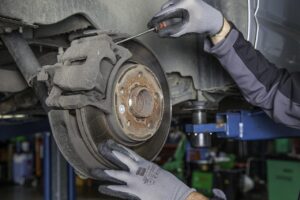
In common gas-powered vehicles, the braking system involves transferring the kinetic energy of the motor into heat energy when friction is applied. This system, however, is not the most efficient, as heat is lost into the environment rather than being restored in the car. Due to this issue, electric vehicles use a unique braking system known as Regenerative Braking. In this system, the energy is not lost as heat but rather restored in the car as electrical potential energy in the battery. The key difference between the two systems is that the motor in gas-powered vehicles relies on friction, while the motor during regenerative braking minimizes friction by using the wheels to drive the motor. While this is often labelled as the reverse spin of a motor, it isn’t changing directions but rather becoming dependent on the wheel, hence the car can stop.

Why Regenerative Braking Matters?
Not only is Regenerative braking more efficient, yet it also promotes an increased range in Hybrid and electric vehicles. This means it can travel further distances in a set amount of energy. Many sources say that the range increases by 10-20%! Additionally, Regenerative Braking is better for the environment as it allows a car to optimize its battery before having to recharge. This is also beneficial when considering brake dust emissions. Brake dust is the fumes released when the brake pads use friction to stop. The metal, rubber, fibre and other materials merge into the air through normal brake systems, which adds to lower air quality. The regenerative brakes use less friction, hence they only emit slight amounts of brake dust.
Considering the positive aspects of regenerative braking is important for us as youth who will be future car owners. We must take into consideration all the impacts our actions will have on our carbon footprint to sustain the Earth for future generations.
Disadvantages of Regenerative Braking?
While the environmental aspects, as well as efficiency, are reasons why car owners prefer regenerative braking, many individuals do not like the system. One cause is its reduced effectiveness at lower speeds. If you live in a city with few highways in which drivers do not require much speed, the efficiency of the brakes isn’t as effective. Consider that more energy is recycled at increased speeds; hence, its ability to increase an EV’s range is not powerful for low speeds. Another disadvantage of this braking system is the effort you have to put in for a response. While common braking systems and regenerative ones have similar safety standards, there are drivers who feel they need to put more effort into braking for the same effectiveness as a gas-powered car. This is an issue which is seen more commonly throughout older EV models.

Conclusion:
While regenerative braking is a complex topic, the ideas unpacked in this article are crucial in making educated decisions for the future. Regenerative brakes are the best way to increase EV efficiency while also enhancing the range. On the flip side, regenerative brakes are less effective at lower speeds. Our carbon footprint can be reduced through consumer choices in protecting our planet while still ensuring the best driving experiences. Altogether, the concept of Regenerative Brakes offers a unique alternative to the regular gas-powered vehicle brakes.
Sources:
https://ama.ab.ca/articles/evs-regenerative-braking
https://www.rematec.com/news/process-and-technology/brake-emissions-reduce-emissions
https://www.tiresplus.com/blog/brakes/what-is-regenerative-braking-in-electric-vehicles/