

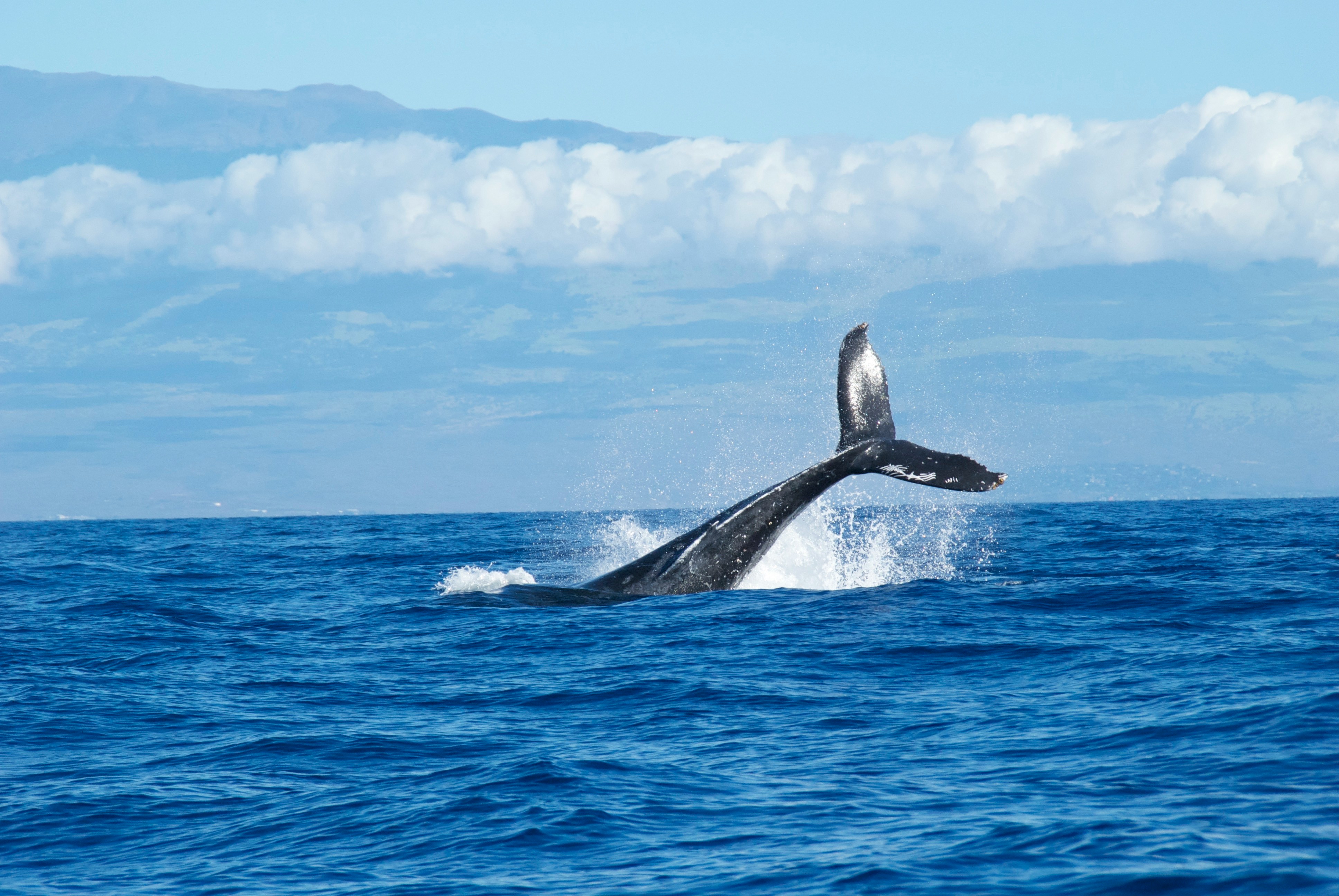
For decades, we’ve dreamed of talking with animals. From Dr. Dolittle to science fiction, the idea has captured our imagination. Now, off the coast of Dominica, that dream is edging closer. Scientists have discovered that sperm whales communicate using a complex “phonetic alphabet”, a “whale alphabet” of sorts, and now, artificial intelligence is helping us crack the code.
A Click Language with Hidden Depths
Sperm whales are highly social creatures. They live in tight‑knit family units, raise calves together, and make group decisions. For years, researchers knew they communicated with short bursts of clicks called codas, identifying about 21 distinct types in the Caribbean. But whale society is too rich for only 21 “words.” Something must have been missing.
In 2024, a team from Project CETI and MIT analyzed nearly 9,000 codas recorded over more than a decade. They identified a surprising discovery, whereby whales don’t just repeat fixed patterns. Instead, they combine smaller features, such as a human alphabet, to create a vast range of possible vocalizations.
A Phonetic Alphabet for Whales
The researchers uncovered four key building blocks that work together:
-
Rhythm – the overall click pattern, independent of speed.
-
Tempo – how fast the pattern is, falling into five distinct categories.
-
Rubato – smooth speed‑ups or slow‑downs that whales mirror during conversation, almost like a musical duet.
-
Ornamentation – extra clicks that act like punctuation, often appearing when a conversation is about to shift from one whale to another.
Through the mix of these elements, including 18 rhythms, 5 tempos, optional rubato, and optional ornamentation, whales can generate hundreds of distinct codas. This initially perceived limited vocabulary is actually a flexible combinatorial system, capable of carrying far more information than previously thought.
How AI Helped Crack the Code
Machine learning was the primary driver of this discovery. AI sifted through thousands of hours of recordings, spotting subtle patterns human ears might miss, such as how whales match each other’s rubato across conversational turns. The algorithms helped cluster codas into rhythm families, revealing the hidden, underlying structure beneath the clicks.
Scientists then validated the AI’s findings against real whale behavior, ensuring the patterns were meaningful. This formed the grounds for a powerful partnership: AI-driven heavy lifting and meaningful human context. As Project CETI founder David Gruber told ABC News, the goal isn’t just limited to whales, but learning to understand non‑human intelligence on Earth, an understanding that may one day help us recognize it elsewhere.
Why This Matters to Us
This discovery changes how we see animals. Intelligence isn’t a ladder with humans at the top. Whales evolved a rich communication system built from clicks, different from ours, but no less sophisticated.
It also matters for conservation. If we understand whale culture through their clans, traditions, and social bonds, we can protect them more thoughtfully. Currently, conservation focuses on numbers. But understanding their social world could lead to deeper, more respectful protection.
And it’s a proving ground for AI. Decoding the “whale alphabet” teaches us how to decode signals from other species, and perhaps one day from beyond our planet.
What Comes Next
We’re not quite at “talk to whales” yet. We’ve decoded structure, not meaning, and we don’t know if they have names for each other, tell stories, or have words for the ocean. Answering those questions will require more data, more AI analysis, and eventually interactive experiments where we try to “speak back.”
But we now know the “whale alphabet” is rich and structured. It is not limited to a fixed list of calls, but a flexible system capable of expressing a huge range of ideas. That’s an invitation to listen closer.
With AI as our tool, we’re finally starting to hear what whales have been saying all along.
Sources:
-
Sharma et al., Nature Communications, 2024 – https://www.nature.com/articles/s41467-024-47221-8
-
Project CETI – earthspecies.org
-
ABC7 News / National Geographic, 2024 – https://abc7news.com/post/how-ai-is-helping-decipher-animal-communication/