

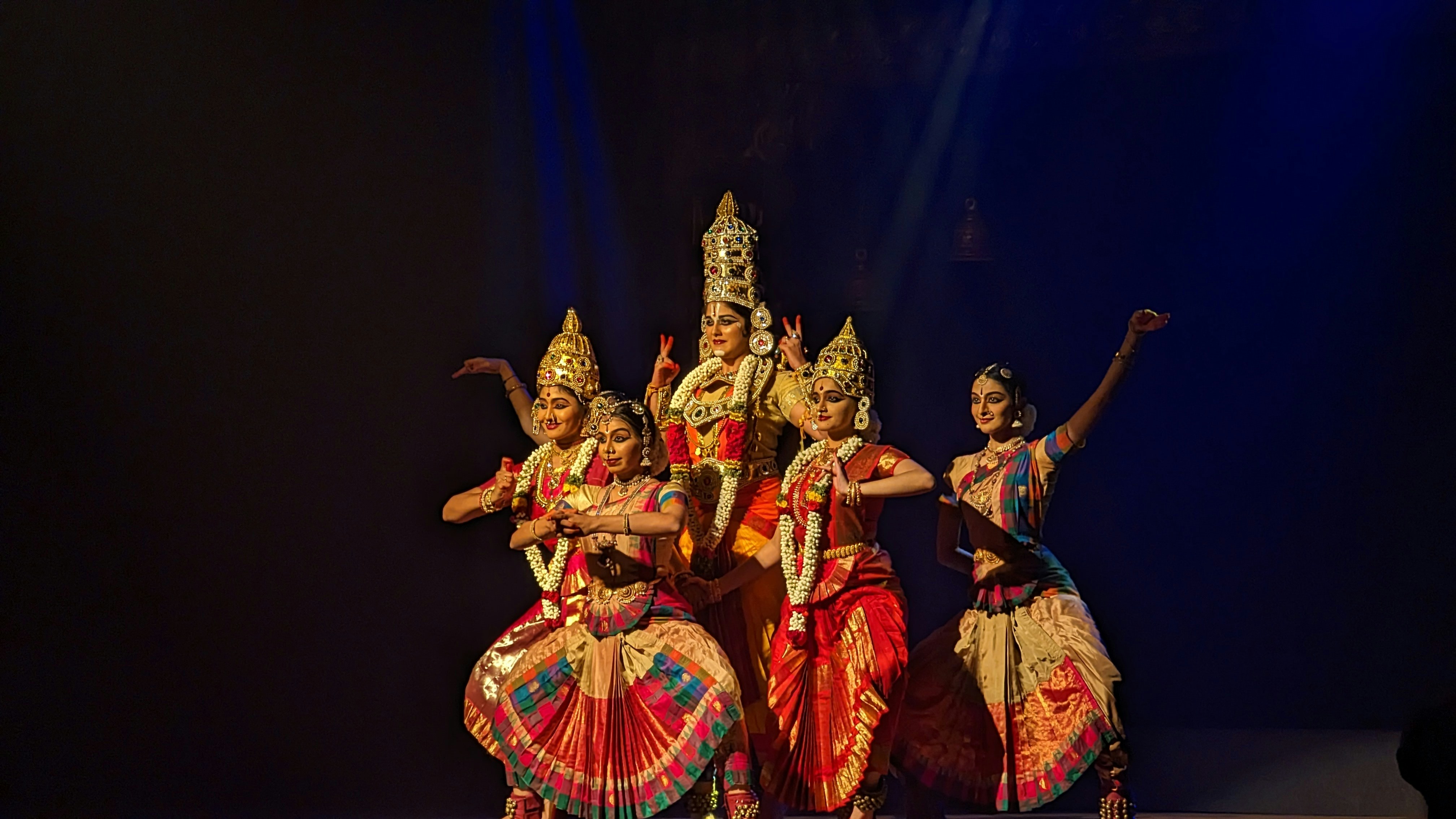
When I first started learning Bharatanatyam, I thought it was just another form of dance. I already enjoyed movement, rhythm, and performance, so I assumed I would pick it up quickly. I was wrong. Bharatanatyam demanded something I wasn’t used to giving so deliberately: patience and precision.
Unlike styles where movement can feel free-flowing, Bharatanatyam is exact. Every hand gesture, every eye movement, every bend of the knee has meaning. At first, this was frustrating. I wanted to move faster, to feel graceful immediately, but instead I found myself stuck repeating basic steps, correcting posture, and holding positions longer than felt comfortable.
Patience was the first lesson Bharatanatyam forced me to learn. Progress was slow, sometimes painfully so. I would practice the same adavu again and again, only to be told it still wasn’t quite right. My legs would ache, my ankles would burn, and my arms would feel heavy, but stopping early was never an option. Over time, I realized that improvement didn’t come from rushing. It came from showing up consistently, even on days when nothing seemed to click.
Precision was the second lesson, and perhaps the harder one. In Bharatanatyam, small mistakes stand out. A hand turned slightly the wrong way or eyes that move a moment too late can change the entire expression of a piece. I learned that precision is not about being stiff or perfect. It is about awareness. Every movement must be intentional, connected to rhythm, expression, and storytelling.
As I improved, I began to understand why this level of detail mattered. Bharatanatyam is not just movement set to music. It is communication. The dancer carries responsibility for the story, the emotion, and the tradition behind every piece. That responsibility made me more mindful of my body and more respectful of the art form itself.
This mindset slowly began to shape other areas of my life. I became more careful with my work, more attentive to feedback, and more willing to revisit things I thought I had already mastered. Bharatanatyam taught me that repeating the basics is not a step backward. It is often the foundation for growth.
Perhaps the most important lesson was how patience and precision work together. Precision cannot exist without patience, and patience becomes meaningful when it is directed toward something specific. Bharatanatyam showed me that growth is quiet. It happens in repetition, correction, and persistence, not in sudden moments of perfection.
Even now, every performance carries reminders of those early lessons. The stillness before movement, the control behind expression, and the discipline beneath the beauty all reflect what Bharatanatyam has taught me. The stage may show confidence, but it is built on hours of slow, deliberate practice.
Learning Bharatanatyam did not just teach me how to dance. It taught me how to slow down, trust the process, and value precision in everything I do. Those lessons stay with me long after the music ends.