
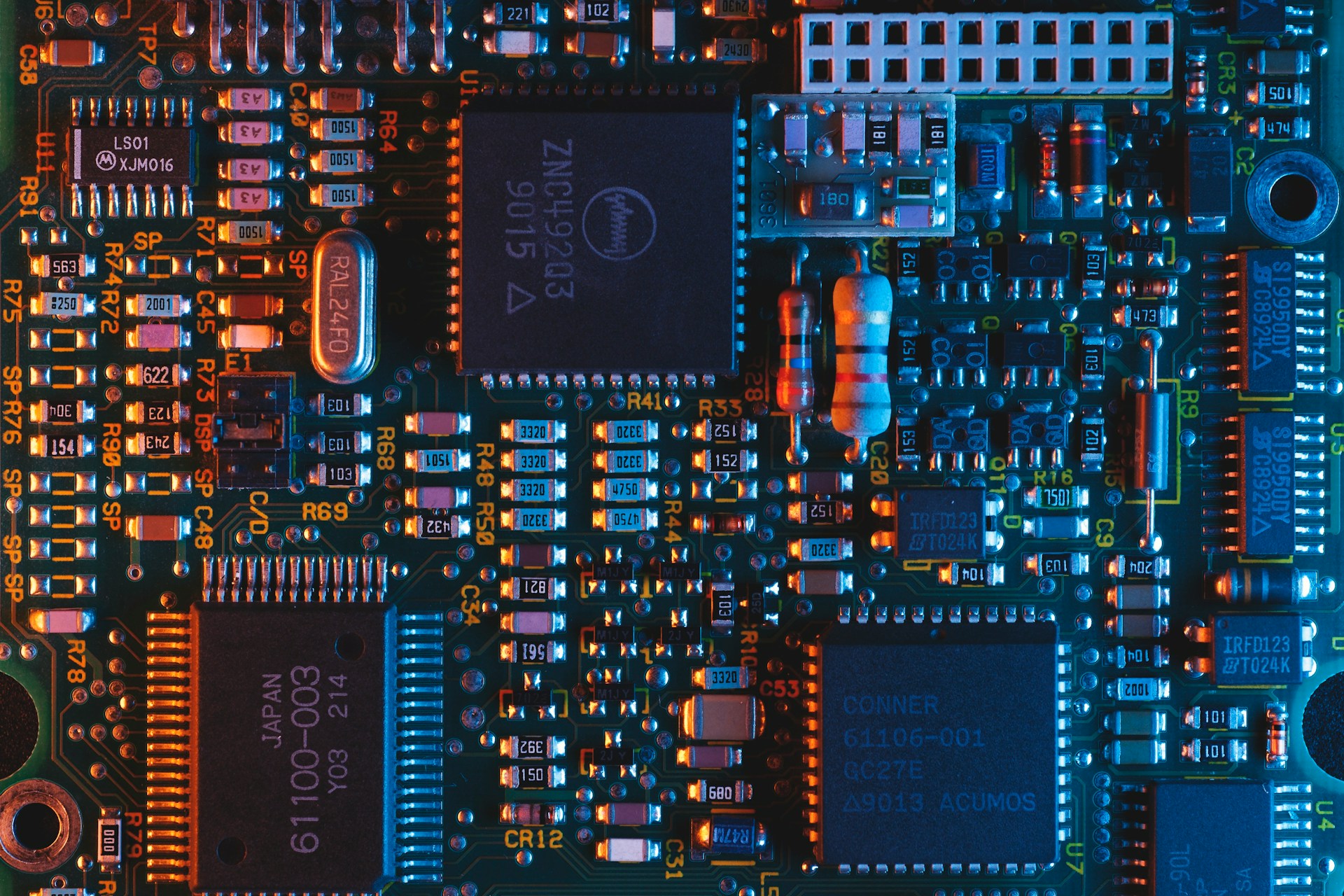

Imagine the world without smartphones, computers and modern technology, from TVs to cars, advanced medical equipment and smart home gadgets. Life as we know it today would be completely different without the development of what is arguably the most revolutionary piece of technology ever created: the transistor. In this blog post, we will be taking a deep dive into the function of a transistor, its history and how it came to be a foundation of technology, and how it is used in modern devices.
What is a Transistor?
A transistor is a semiconductor electronic component which can act as an electric switch or amplifier, which controls the flow of electricity and electric signals. All transistors have three separate terminals, each of which serves a different purpose depending on the type of transistor. Fundamentally, a transistor works by using an electric signal at one terminal to control a larger current flow between the two other terminals, acting as switches or amplifiers in different cases.
Here are two methods that most transistors work:
1) As a Switch to control the flow of electric signals: Transistors use digital logic to represent the two states: on and off. When no electric signal is applied to the control terminal, the transistor acts as an open switch, blocking the current and electric signal from flowing between the two terminals. When a sufficient electric signal is supplied to the control terminal, the transistor becomes fully active, acting like a closed switch that allows current to fully flow between the two other terminals, representing the on state. Computers use these two states to represent binary code, which includes a series of 0s and 1s, representing the off and on states.
2) As an Amplifier: We can amplify electric signals using transistors by providing small electric signals in one terminal to control a much larger current flow between the other two terminals. Unlike switches, which have two distinct states, using a transistor as an amplifier allows us to have an output proportional to the input. A minor change in the signal in the control circuit produces a change directly proportional to the output current. This quality of transistors allows us to amplify weak signals (like those from a microphone) into stronger signals (like those needed to operate a loudspeaker).
There are many different types of transistors, with the major ones being: Bipolar Junction Transistors (BJT) and Field Effect Transistors (FET). A field effect transistor works by using a voltage at its gate terminal to create an electric field that controls the current flow between the source and drain terminals. Common types of FETs include MOSFETs and JFETs. Whereas a bipolar junction transistor has the current flow between the emitter and collector terminals controlled by a current at its base terminal. The two types of BJTs are PNP and NPN Transistors.
There are also other specialized transistors, like the phototransistor, which may not look like the more common transistors but have similar functionalities.
The History of Transistors and How it Came to Be
Before the revolutionary invention of transistors, most electronic devices relied primarily on large, bulky vacuum tubes to amplify signals and act as switches to control electric flow. These tubes were bulky, fragile, and inefficient, which paved the way for the invention of transistors. In 1947, physicists from Bell Labs found a better way to control signals using semiconductors. They developed the first transistor, which had the same functions as the vacuum tubes but was much smaller and more efficient.
With the evolution of technology, scientists and engineers have developed new methods to make efficient transistors and established newer models that are more specialized, which can be carved onto silicon chips. Today, instead of a giant glass tube, we are able to fit billions of transistors onto a tiny microchip.
With the development of new models, new transistors made from Gallium Nitride and Silicon Carbide are used alongside the traditional silicon transistors to make existing systems, such as EV charging, more efficient.
How Transistors are used in Modern Devices
Transistors with their functionality and wide array of uses form the fundamental building block of integrated circuits used in numerous microchips and technology. Transistors allow modern technology, as big as supercomputers and as small as microchips, to enable digital processing, memory and logic. The invention of transistors allowed engineers to develop smaller and more efficient machines that are more efficient. Did you know that a cheap smartphone that can be placed into our pockets today is millions of times more powerful than a computer that took up a room before transistors were discovered?