

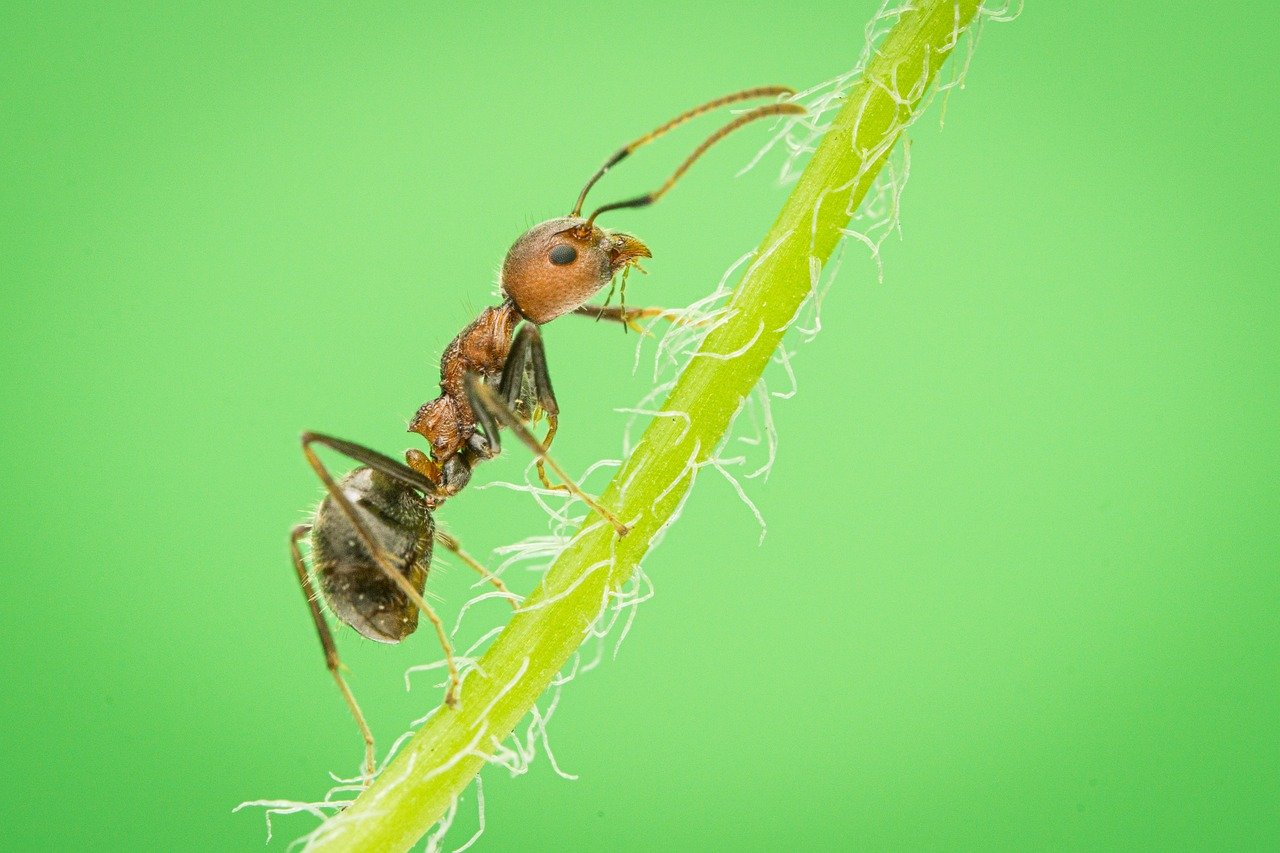
Imagine being an ant, minding your own tiny ant business, and suddenly your brain gets hijacked by a fungus and within mere moments your fate as a vessel for ophiocordyceps unilateralis spores has been sealed. Welcome to the world of the zombie ant fungus, a parasitic organism that, before killing its victims, turns them into mindless, walking spore dispensers. Yes, it’s as creepy as it sounds, and yes, it is the source of the zombie outbreak in The Last of Us.
Once infected, an ant becomes completely brainwashed, abandons its colony and searches for a warm, humid location near the ground to lock into a “death grip” and wait for the fungus inside to grow and eventually sprout a stalk out the base of the ants head, effectively killing it and spreading new fungi babies. It’s pretty nonsensically messed up, but in reality this method of survival works very well, and the ophiocordyceps plays a vital role in ecosystem function. For the purpose of simplicity, I will be calling this organism the ZAF (Zombie Ant Fungus).
What is it?
The ZAF, one of the 144,000 species of fungi, is pantropical (a zoogeographic term describing creatures that thrive best in the tropical regions of both hemispheres) and primarily affects carpenter ants. While some studies suggest multiple specialized strains, others indicate a more direct relationship between species without any complex branching off.
How does it work?
The ZAF begins as a spore on the forest floor that attaches itself to a passing carpenter ant without triggering a defensive response (as you can see, this could be a major driving point in carpenter ant adaptation). After this, the fungus germinates (the development of a plant from a spore or seed) creating hyphae (long, threadlike filaments in fungi that serve to breach food sources and absorb nutrients after digestion) which penetrate the ant’s exoskeleton.
Once inside its victim, the ZAF manipulates the ant’s behavior and patterns of movement, rendering it unresponsive to external stimuli. The ant abandons it’s colony and refuses to engage or interact with members, climbing far off into the forest. Most research suggests the hyphae enter the ant’s bloodstream and forms concentrated networks of fibers around its muscles and nervous system directly, rather than controlling its brain.
As a result, the ant locks its mandibles in a death grip and the ZAF ingests the creature from the inside out, erecting a stalk from its head and continuing the cycle with new spores.
Why only carpenter ants?
This fungus has evolved to be extremely specialized and only targets one particular type of compound ant species found in tropical and temperate forests.
Why is it important for ecosystems?
This advanced mechanism of self-propagation has many benefits in the natural world.
While it may be unsettling and gross to us, these silent attackers operate in the favor of creatures like the board leafed evergreen and milkweed aphid.
Firstly, the ZAF helps with ant population control and promotes ecosystem prosperity by managing the amount of greenery consumed and damaged by ants.
Millions of other insect species in these habitats also depend on plants for their survival, including aphids, grasshoppers, caterpillars, beetles, and other ant species.
Furthermore, it serves as a natural disease regulator and prevents mass outbreaks within tightly packed ant colonies, and stabilizes the ecosystem of forests, maintaining a balanced, diverse and sustainable landscape.
Surprisingly, the ZAF can also be used in medicine and science as researchers are interested in its potential for helping develop new anti-cancer medication or immunomodulatory agents (substances that can modify your immune system’s functioning so it is more effective by decreasing or increasing your immune response).
Finally, the ZAF forces ants to develop defenses, identify diseases and protect their colonies, which in turn propels both organism’s evolution and adaptation.
So, the next time you think about crushing a mushroom you’ve found in your backyard, remember that it could be ophiocordyceps unilateralis… A reminder that even the creepiest organisms aren’t always as frightening as they seem.
Sources:
https://www.britannica.com/science/zombie-ant-fungus
https://en.wikipedia.org/wiki/Ophiocordyceps_unilateralis
https://study.com/academy/lesson/hyphae-definition-function-types.html