

What Does Failure Truly Mean:
Everyone has experienced failure in their lives in one way or another. While some setbacks are not as impactful as others, the feeling of failure is predominantly dismaying. Failure is an individual criterion, wherein it is subjective and dependent on your goals. Society defines failure as certain events which derail your journey. For youth, society defines failure as receiving bad grades, failing a class, losing a game in a sport, or being incapable of certain achievements etc. While many of us share such experiences, they are not truly failures. The criteria of failure provided by those around us are often false since they do not consider the full experience of failure. The broader context of setbacks, including growth, reflection and learning, is overlooked while the focus is on the outcomes of failure. Due to this misunderstanding of failure, individuals struggle with emotional and mental health when faced with failure.

How Do We Redefine Failure:
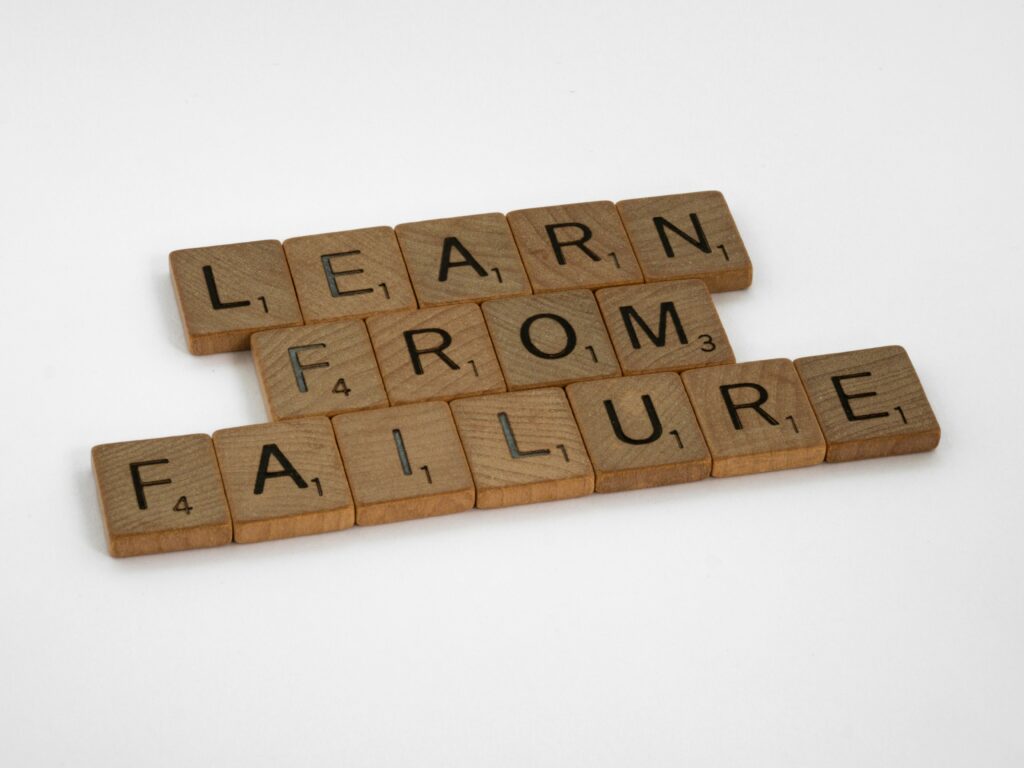
In order to truly accept and appreciate the unexpected turns in your journey, you must separate negativity and failure. Thinking of failure as a new opportunity to learn will help you resist discouragement. Failure can easily disappoint us because of how we accept the experience. Specifically, for youth, setbacks come with external pressure from parents, other students, and teachers. Humans steer away from rationality and emphasize impulsive emotional responses after experiencing failure. This is the one instinct you must avoid to overcome setbacks. For instance, suppose your grade for a unit test was not as great as you expected. Many students will fall into negativity and picture their academic downfall from that point onwards. Other common responses can involve comparing your grade to another student who received a better grade. While individual responses cannot be measured as wrong or right, a positive approach towards failure will help develop the qualities of resilience and perseverance.

Why is it Important to Handle Failure with Positivity?
With the rise of social media, youth are expected to live life in a certain way, in which certain experiences set the criteria for success. For instance, obtaining degrees and becoming wealthy is glorified while internal happiness and optimism aren’t as heavily discussed within the community. By categorizing life events as success or failure, we are demotivating ourselves and suppressing the uniqueness within individual experiences. Instead, approaching failure as an opportunity to grow and learn stimulates excitement and positivity in stressful situations. For example, applying positivity to academic failure can redefine education and make learning a valuable process, ultimately reducing stress.
Conclusion:
Altogether, failure is inevitable; however, reducing stress and embracing our individual journeys can make our experiences more valuable. As youth, we are faced with lots of failure and being able to tackle such moments with a growth mindset is crucial to stimulate positivity. Redefining failure by steering away from impulsive reactions and understanding our mistakes as an opportunity will lead to long-term personal growth. So remember, the next time you feel like you’re failing, celebrate the experience because you are pushing yourself forward.