

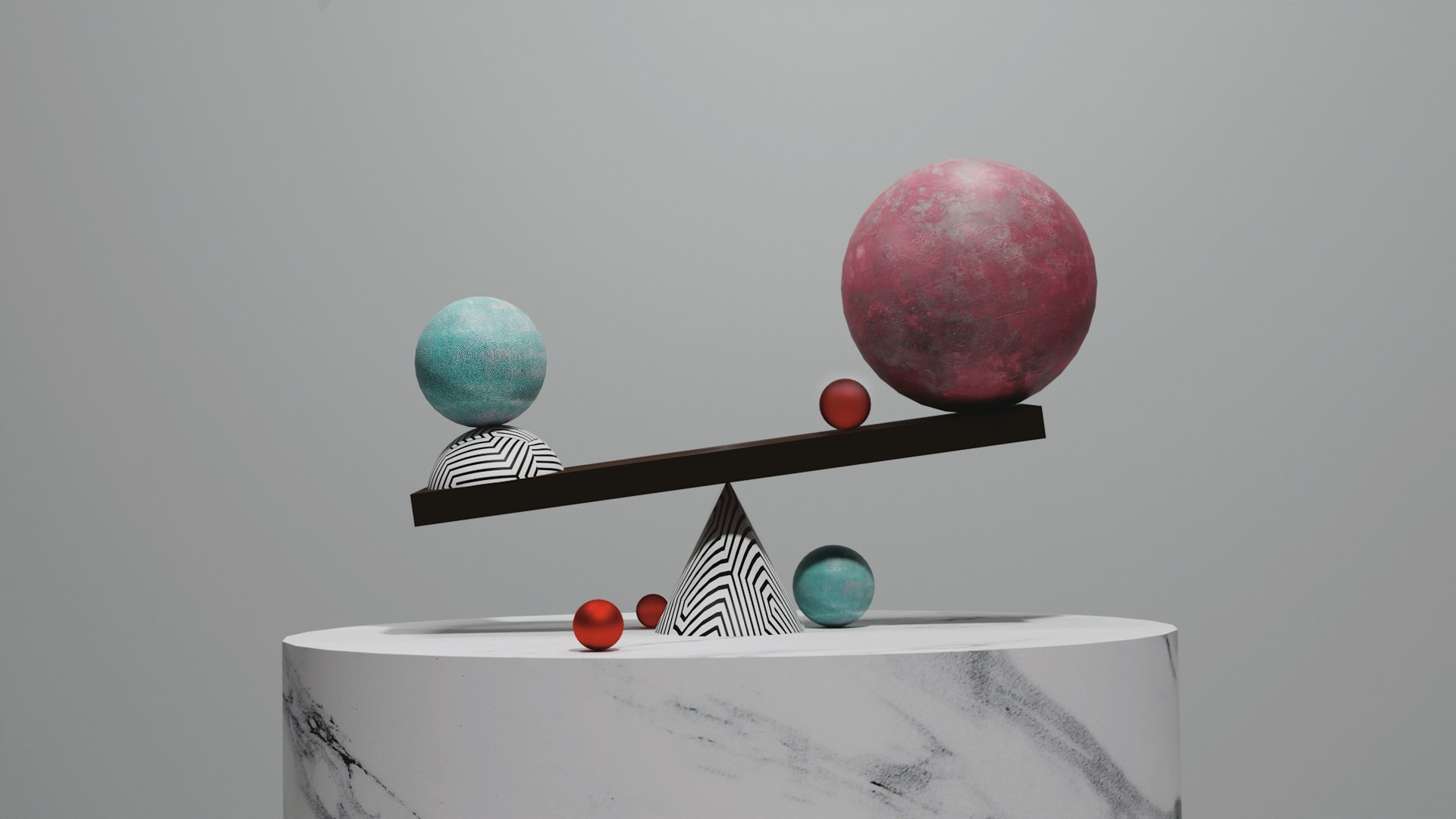
From measuring your body weight to measuring ingredients used for cooking, weighing scales are essential in modern life. But have you ever wondered how these intricate machines work or the history behind them? Weighing machines are one of the oldest scientific tools that humans have used across history. In this blog post, we will be taking a look at the history of how humans have measured mass, how modern mass scales work, and the difference between mass.
History of Measuring Mass
The act of measuring mass dates back to ancient civilizations, which was primarily used for trade and commerce. Here are some of the notable methods used to measure the mass of objects from across history:
- The Balance Scale: This was one of the earliest known methods of measuring mass, which utilizes a lever with two pans attached to it. The object that is being measured is added to one of the pans, and standardized stones of known masses are placed on the other pans until the beam is level. The pan with the heavier side will lower, making the lighter side tilt upwards, and the intention of this scale is to level both sides.
- The Steelyard: The steelyard is an instrument used by ancient Romans, which utilizes the principle of levers with unequal arms, for weighing goods. The beam is divided into 2 sides for the load and for the counterweight. Instead of adding multiple heavy counterweights, a single counterweight is moved along the long arm until the beam levels horizontally. The measurement is read from the notches on the beam where the sliding weight is stopped.
- Spring Scales: The spring scale is an instrument that measures weight based on the displacement of a spring, and using Hooke’s Law, the force of gravity can be measured. This marks the transition from balancing masses to measuring the gravitational force.
Units: In ancient history, the units of measurement were often seeds. Other units include the grain of wheat, carats, which is still commonly used today for gems.
How Modern Mass Scales work
As technology has rapidly evolved, newer methods of accurately measuring mass have been developed. Modern digital scales convert mechanical pressure into precise digital data using complex mechanisms and electronic sensors. Inside the scale is a component called a load cell, which slightly bends as the mass is being placed on the scale. Tiny electric sensors detect this bend and convert it to an electrical signal, which is then translated into the numbers we see on the screen by microchips. As technology continues to evolve, new methods such as quantum weighing are being constantly developed to improve accuracy and efficiency.
Key difference between Mass and Weight
A common misconception that many people have is that mass and weight are the same. However, it is not the case as mass is a measure, usually in kilograms, of how much matter an item contains and never changes, regardless of where you are. On the other hand, weight is a measure of the force of gravity, usually measured in Newtons, that is being acted on an object and will change depending on the gravitational field. For example, the Moon’s gravity is about 1/6th of the Earth’s, meaning you would weigh significantly less on the Moon compared to Earth, while having the same mass.
On Earth, gravity is constant at about 9.81 m/s², so a scale provides a consistent reading, which we call weight, but is technically mass. However, this difference is crucial in space or on other planets, where gravity varies.