

In most objects we use, from cell phones to mirrors that we take for granted, electromagnetic waves play a major role. Even the visible light we see is a type of electromagnetic wave. The discovery of electromagnetic waves and our ability to harness them to send data across large distances is a notable advancement in humanity. In this blog post, we will be taking a look at how electromagnetic waves are produced, the electromagnetic wave spectrum, the history of electromagnetic waves, and some notable applications of electromagnetic waves.
How Electromagnetic Waves are Produced
Electromagnetic waves are produced by an acceleration of charged particles. The key is that there needs to be some changing and oscillating electric or magnetic field around a specific area. This change in the electric field, for example, induces a changing magnetic field perpendicular to the electric field, which induces a changing electric field perpendicular to the magnetic field and so on. These waves propagate in a direction that is perpendicular to both the electric and magnetic fields.
The Electromagnetic Spectrum
The electromagnetic spectrum is the full range of all types of electromagnetic waves that is organised by wavelength and frequency. The types of electromagnetic waves that are a part of the spectrum are: radio waves, microwaves, infrared, visible light, ultraviolet, X-rays, and gamma rays. All of these waves travel at the speed of light and are a form of electromagnetic waves.
History
Years ago, many philosophers and scientists believed that light appeared instantaneously rather than as a wave propagating across space. The theory of electromagnetic waves was first predicted and developed by the scientist James Maxwell. Years later, these predictions were validated by Heinrich Hertz, who was the first person to produce and detect an electromagnetic wave. In this experiment, Hertz used a spark-gap transmitter to accelerate charged particles to produce a radio wave and was able to detect it using a receiver with an antenna.
These developments later paved the way for scientists to determine the speed of light. The first accurate measurement of the speed of light was made by Albert Michelson. He used a rotating octagon-shaped mirror, with 8 sides, to shine a beam of light and reflect it to another mirror located a large distance away, and reflect it back to the next side of the mirror. Michelson rapidly spun the mirror to determine the time it took for the light beam to travel to the separate mirror and reflect back. He was able to find the time by determining the frequency of rotation of the mirror, finding the period and dividing it by the number of mirror sides. With some more calculations, he determined the speed of light to be 299,940 kilometres per second, which is extremely close to the modern accepted value of 299,792.458 kilometres per second.
Applications of Electromagnetic Waves
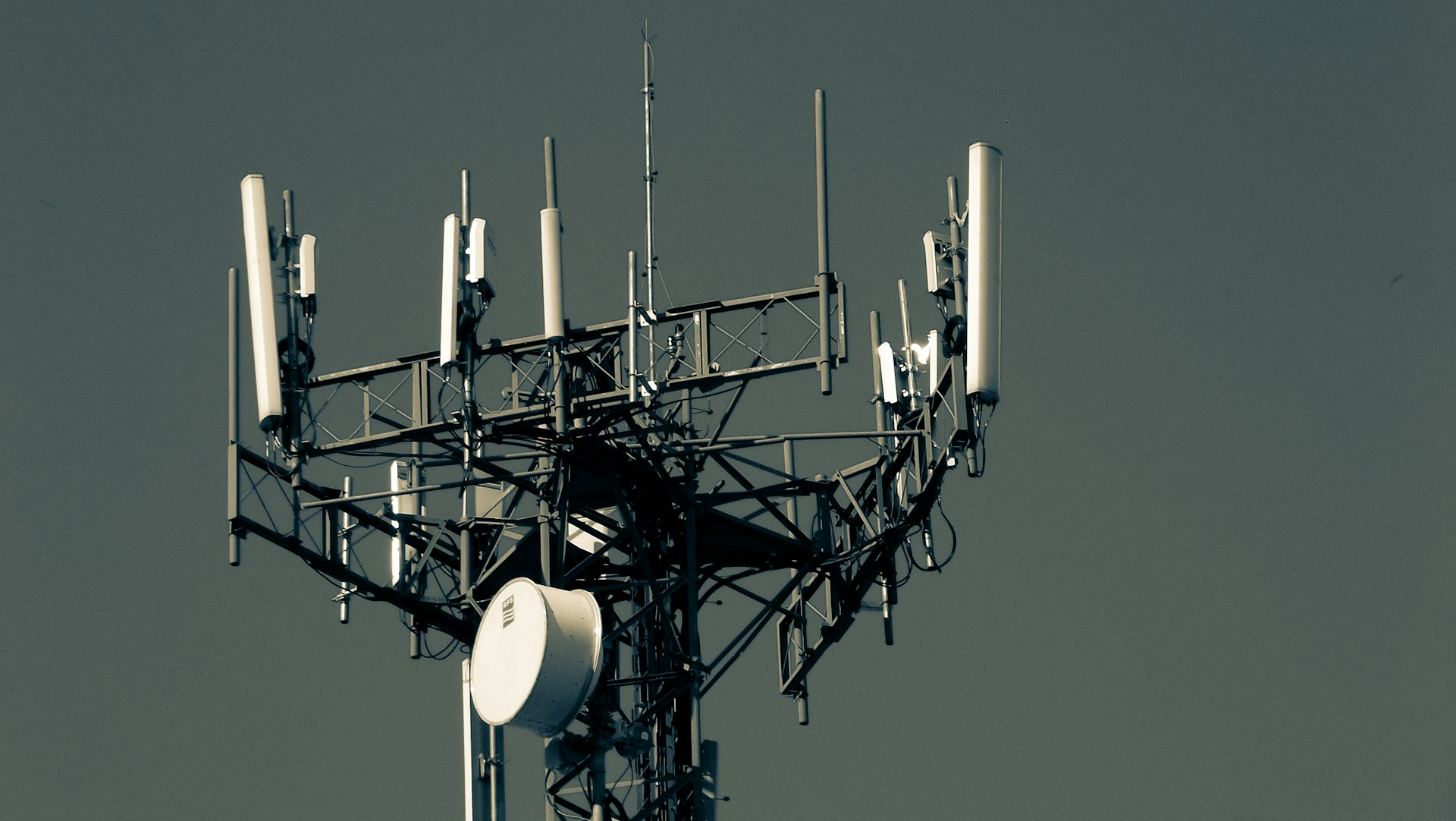
Currently, electromagnetic waves are used in a variety of different applications, ranging from telecommunications to optics. Radio waves are used to transmit signals over long distances, while microwaves are used for Wi-fi and satellite communication. The visible light we see is also a type of electromagnetic wave produced by the transition of electrons in atoms. The concept of electromagnetic waves is also the reason behind the function of mirrors and lenses. Another example of electromagnetic waves used in modern technology is the science behind fibre optics. This system uses the total internal reflection of light rays to send data long distances.