

Ever since the Cold War, rapid developments in the field of space exploration have been made. There have been numerous space missions to various destinations in outer space, such as the Moon, Mars, the Asteroid belts and even some outside our solar system. As of now, the farthest man-made object is the Voyager 1 spacecraft, launched in 1977, which is 25 billion kilometres from Earth. It is the first spacecraft to leave our solar system and travel in the vast area of interstellar space. And still it will take a whopping 4.5 billion years for the spacecraft to even exit the Milky Way Galaxy, showing the enormous scale of our galaxy, which is still a tiny part of the universe.
How big is the observable universe that is known to humanity?
It is said that the observable universe consists of about 2 trillion galaxies, each consisting of about 100 to 400 billion stars, which are orbited by at least 2 planets. A solar system is a star and every object bound to it by gravity. Our solar system consists of 8 planets and numerous other asteroids, dwarf planets, comets and other objects orbiting the sun. Did you know that even our solar system as a whole is constantly in motion, orbiting around the center of our galaxy?
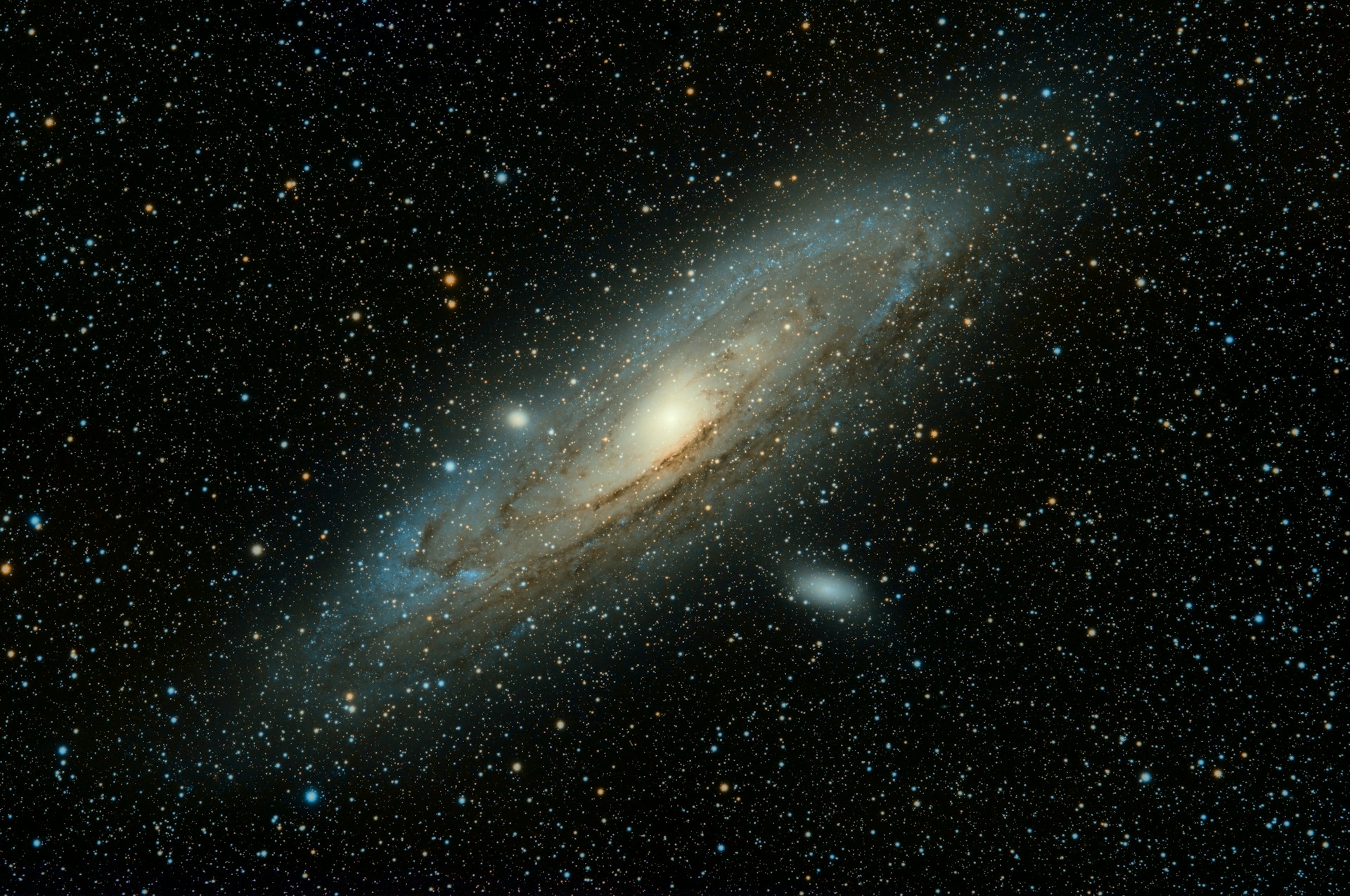
The diameter of our solar system is about 2 light-years, which is just a tiny fraction of the Milky Way galaxy. One light year is the distance it takes for light to travel one year. To put things in perspective, light travels at a speed of about 300,000,000 m/s. The Milky Way is about 105,000 light-years in diameter. Outside our galaxy is the vast emptiness of space, filled with galaxies separated by unimaginable distances. The Andromeda galaxy, our nearest galaxy, is 2.5 million light-years away from the Milky Way.
The observable universe known to humanity spans a mind-boggling distance of about 93 billion light-years in diameter. And still, the true size of the universe as a whole is unknown, as our current technology only allows us to see till the distance of the observable universe. Some suggest that the universe can be infinitely large and constantly expanding, in which the observable universe is a tiny speck.
The likelihood of life on other planets
Many scientists believe there is a high chance of life outside Earth, given the universe’s massive scale and how there is an abundance of Earth-like planets containing essential resources like water. Firstly, let’s take a look at what makes Earth habitable. Earth has an abundance of liquid water, a thick atmosphere which protects us from harsh radiation, a suitable temperature for life and many more factors which are supported by its ideal location in the “Goldilocks Zone”. The Goldilocks zone is a term referring to the area around the sun in which temperatures are suitable for liquid water, which is essential for life. As of now, scientists believe we have identified around 50 Earth-like planets within our galaxy in other solar systems. With more and more technological advancements, scientists are constantly discovering new exoplanets and researching whether they contain life.
Seeing the massive scale of the universe and our tiny “pale blue dot”, as said by Carl Sagan, we must appreciate and take care of our only known home as of now, Earth, at all costs. As humans, we have harmed the planet in many different ways. From now on, let us give back by reusing, recycling and becoming eco-friendly.