

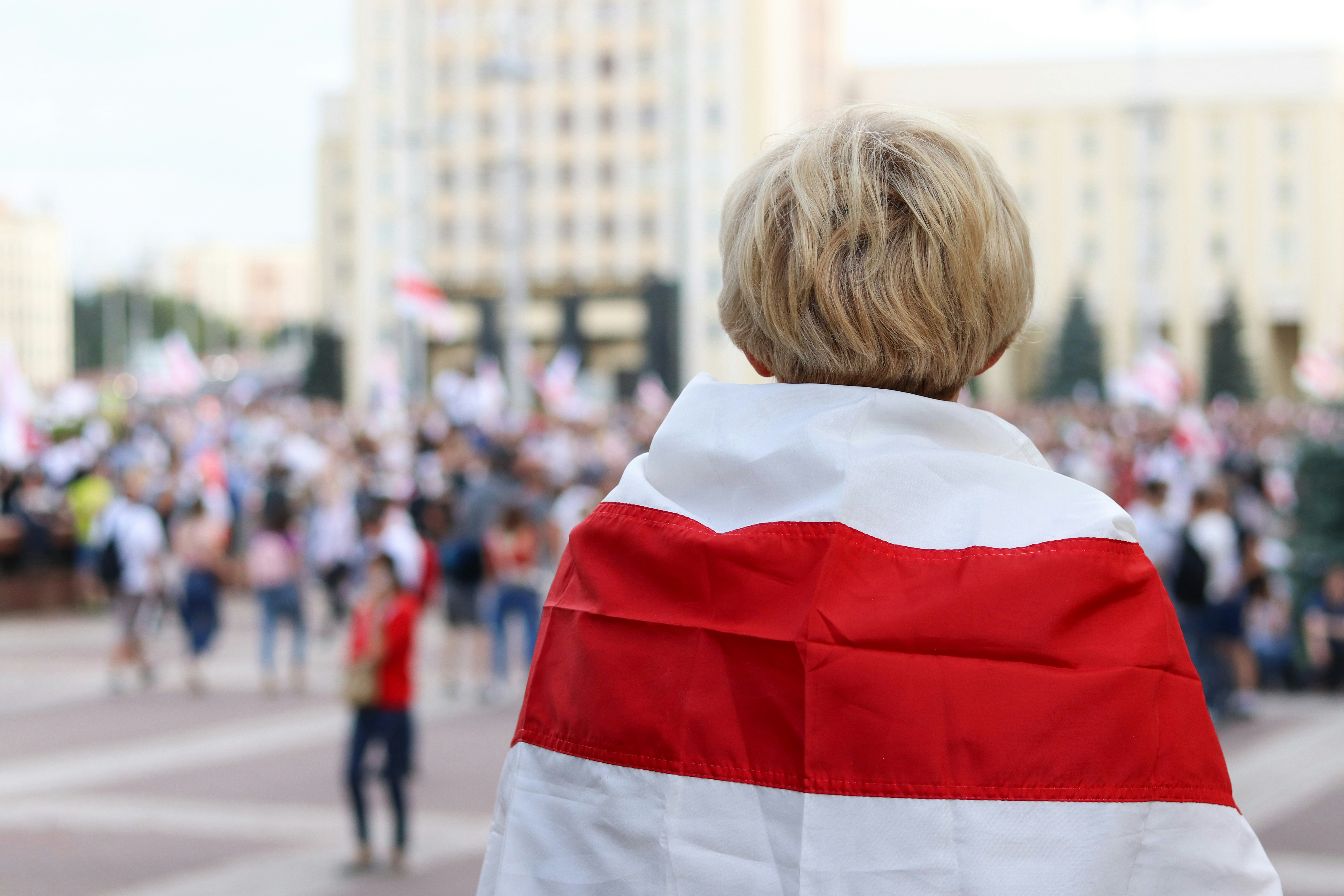
Belarus, throughout the years from 1918, and decades of Soviet domination, emerged as an independent state in 1991, with hopes and dreams of a democratic society built on the ideals of liberalism. Like other prior Soviet republics, the country’s establishment and early years were marked by political turmoil and overall economic instability, due to the struggle of the transition from a communist system to a liberal one. Within these early years, dreams of liberalism began to fade out with the rise and promises of a leader named Alexander Lukashenko in 1994 as Belarus’s first and only democratically elected president. As the ‘voice of the common people’, and ‘protector of the distinct Belarusian national identity’, his leadership would allow for the unfortunate and slow descent of Belarus’s return to authoritarianism.
Lukashenko’s reign began with promises of restoring the economy while managing the chaos caused to the entire region after the collapse of the Soviet Union. Like prior leaders before him, Lukashenko positioned himself as the only one capable to withstand such a feat. Within a few years, Lukashenko began to dismantle the fragile and new democratic institutions that failed to be fully developed. Changes to the constitution in 1996, allowed for him to dissolve the parliament, and extend his control to all branches of the government, judiciary and legislature. Overall solidifying a political system using the technique controlled participation.
While elections continued to occur in the years following, they were managed and manipulated to ensure Lukashenko’s indefinite rule. Political opponents were banned, arrested or simply removed, leaving the citizens of Belarus with simply the illusion of democracy. As Belarusian society continued to realize the reality of the democratic freedoms being stipped from them, they resorted to civil disobedience through protests in 2006, 2010, and most significantly from 2020-2021. Leading Lukashenko to resort to violent suppression to maintain his regime. Thousands of protesters were arrested, beaten and tortured by Belarusian officials, with other political opposition being forced into exile. This is the implementation of his second technique of dictatorship, the use of force and terror.
Those who once hoped to help restore peace and change, realized their protests would not be met with negotiation but batons, bullets and harsh prison sentences. Lukashenko’s government’s ability to suppress dissent has created an atmosphere of fear so toxic, conversations cannot be had about the government. Alongside this harsh political violence, Lukashenko has further established his absolute role through complete control over information and the media. State owned media has become the primary source of news, being able to portray Lukashenko in only a positive light, and as the savior of Belarus while framing opposition as threats to national security. Independent media and journalists have been harassed, arrested, and made to flee the country by Lukashenko’s puppets.
Further indoctrination through the youth, with educational institutions reinforcing the state’s narrative, with varying perspectives being suppressed. Introducing our third technique of dictatorship, controlled information, propaganda, and indoctrination. This has allowed Lukashenko to mold public perception, ensuring truth as a tool of his own regime, allowing him to remain Europe’s only remaining dictator to this day. For many Belarusians, especially the younger generation, this limited access to information regarding their own country forces them to rely on word of mouth, whispered rumors, or banned media to create their own reality. The result of Lukashenko’s consolidation of power, is a Belarus where political participation is more than dangerous, and free speech isn’t considered a guaranteed freedom.
The betrayal of the supposed implementation of liberal ideals, was from the steady erosion of rights, disguised as stability and differentiation from the Soviet Union. The replacement of hope for a better future with the normalization of oppression, straying from the promised liberal ideals, Lukashenko’s dictatorship is a modern reminder that the collapse of such liberal ideals is never loud. It’s quiet, and slow, and requires us all to look under the surface of both perpetuated information from the media and misinformation from the public, to ensure our liberal ideals are not stripped from us.
(The flag depicted in the featured image is an historical flag of Belarus often used as a symbol of force and opposition against the current green-red flag used by the current government)