

We were promised the future. Not in vague terms, but in bright, shiny headlines and school posters and TED Talks and pixelated PowerPoint presentations that told us that if we studied hard, stayed out of trouble, and trusted the adults in the room, we’d inherit a better world than the one before.
They said technology would connect us, not divide us. That democracy would evolve, not unravel. That justice was slow, but sure. That “the arc of the moral universe bends toward justice,” even if it takes time.
But what they failed to say was that the arc is only as moral as those in power, and only as just as those who refuse to bend it.
Now, my generation, Gen Z, is waking up in the wreckage of a promise that was never really meant for us. Climate disaster is no longer theoretical. Rising fascism isn’t history, but instead its headlines. Rights we thought were permanent are being erased with the stroke of a pen. Economic systems that were supposed to reward effort have become machines of exploitation. The world we were told we’d lead one day is already on fire, and we’re being handed a paper fan and told to fix it, quietly, politely, and preferably without upsetting the markets.
I don’t remember the exact moment I realized the future wasn’t coming. Maybe it was watching politicians offer “thoughts and prayers” after school shootings, instead of policies. Perhaps it was hearing about another Indigenous community without clean drinking water, while oil pipelines received full government protection. Maybe it was watching world leaders shake hands in photo ops at climate summits, only to return home and approve new fossil fuel projects. Or perhaps it was when I realized that even when people scream the truth, institutions wear noise-cancelling headphones.
There’s this myth that young people don’t care about politics. That we’re too caught up in our screens to care about the real world. But the truth is far more uncomfortable: we care deeply. It’s just that the political system was not built for us. It was built to outlive us and to profit off our silence. We were raised on language that glamorized democracy, but what we’ve seen are governments that bend to billionaires, not people. We were raised on language that praised justice, but what we’ve seen is that justice is expensive, conditional, and often delayed until it no longer matters. We were told to “change the system from within,” but what do you do when the system keeps locking the doors?
What makes this moment uniquely painful is that we’re not just dealing with broken systems. We’re dealing with the deliberate performance of progress. Institutions have learned how to mimic change without actually delivering it. They know the language of equity, the slogans of sustainability, the curated aesthetics of inclusion. A corporation changes its logo for Pride Month while funding anti-LGBTQ+ politicians behind the scenes. A political party posts a land acknowledgement before approving a land grab. A school hosts a mental health awareness week, then punishes students for falling behind. It’s all branding, not transformation. And we’re exhausted.
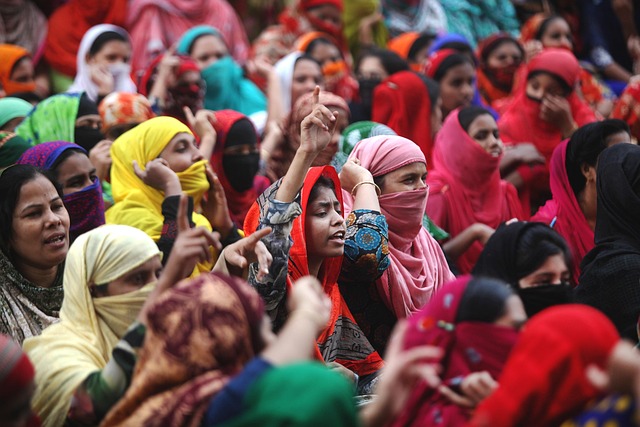
Still, this isn’t a eulogy for the future, not yet. Because, despite everything, something powerful is happening beneath the surface. Young people across the globe are not just paying attention; instead, we’re organizing, protesting, writing, speaking, creating, and building. In India, youth are calling out religious nationalism at the risk of arrest. In Iran, teenage girls are removing their hijabs in acts of breathtaking resistance. In Sudan, youth-led resistance committees coordinate humanitarian aid and strategy in the middle of armed conflict. In Canada, Indigenous youth are reclaiming land and language and culture while fighting centuries of colonial violence. In Gaza, young journalists document occupation and genocide while under siege. And here, in the so-called “free” parts of the world, we’re watching. We’re learning. We’re refusing to be pacified by hollow words.
We may not trust institutions, but we believe in each other. We’ve seen how much power lives in a protest, a petition, a post that cuts through the noise. We’ve seen how truth spreads in defiance of algorithmic censorship. We’ve seen how solidarity builds movements that cross borders and languages and identities. And perhaps most importantly, we’ve seen that hope is not a passive thing. Hope is work. Hope is resistance. Hope is inconvenient. It doesn’t sit quietly and wait for permission. It shows up, again and again, even when it’s tired, even when it’s scared, even when it’s heartbroken.
The future that was promised to us was never truly just ours. However, that doesn’t have to mean that we can’t build one. It’s not just the polished, corporate-approved version that they envisioned, but something more honest. It’s a future built on justice, care, community, accountability, and healing. One measure is not by things like profit margins or military might, but by how fiercely we can protect the most vulnerable.
This future doesn’t hide behind neutrality in the face of oppression. It speaks the truth. It names injustice. And it tears it down.
We were told to wait for the future.
We’re done waiting.
We’re building it together.